

success

How Integrative Chakra Therapy® Reclaims Your Well-Being

A Bridge to Modern Healing

We live in a world where the pursuit of wellness can often feel like just another item on the never-ending to-do list. Juggling deadlines and managing relationships, all while trying to maintain our health. Leaving us feeling disconnected and drained. Well-being becomes a source of pressure rather than peace. But: what if healing was a place of rest, not another catalog of tasks? What if it was less about doing and more about being?
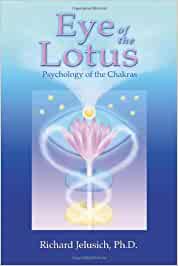
book: Eye of the Lotus

This fundamental shift is at the heart of the pioneering work of Dr. Richard A. Jelusich Integrative Chakra Therapy® (ICT). An approach that moves beyond generic energy healing. ICT presents a revolutionary idea: the seven main chakras are not merely abstract energy centers, but distinct, functional centers of consciousness! Each governing specific aspects of our psychological and emotional being, offering a practical map for self-understanding. The aim is not to add spiritual tasks, but to help you resolve stress and imbalance at their core within your psyche.

The Inner Shift: From Reactivity to Conscious Awareness

Many are initially drawn to Integrative Chakra Therapy® seeking relief from anxiety or chronic stress, and they find it. However, the process is far more profound than simple relaxation. It is a transformative journey from unconscious reactivity to conscious, compassionate awareness.

For example, when your root chakra—the center of safety—holds fear, it can trigger constant anxiety and keep your body in a “fight-or-flight” state. An ICT session brings gentle, conscious attention to this fear, helping release deep wounds and allowing your nervous system to shift from survival to a sense of grounded security.

This initial shift creates the space for profound self-awareness. You might begin to see that your recurring throat chakra issues—such as frequent sore throats or a chronic difficulty in comprehending your truth—are not random occurrences. Instead, they are directly linked to a deeper pattern of stifled self-expression originating in your solar plexus chakra, the seat of your personal power.

What appears on the surface as a physical symptom is, in reality, a poignant conversation between your centers of awareness. Integrative Chakra Therapy® gives you the lexicon to decode this conversation, allowing you to heal the root emotional conflict rather than just repeatedly soothing the surface-level manifestation.

The Modern Medical Bridge: A Partner in Whole-Person Health

ICT’s true strength lies in its alignment with modern healthcare models like Integrative and Functional Medicine, making it a valuable, evidence-informed partner in whole-person care.

In Integrative Medicine, the goal is to blend the best of conventional treatments with validated complementary therapies. Here, Integrative Chakra Therapy® serves as a vital ally to address the profound psychological and emotional toll of illness. For a patient undergoing chemotherapy, work with the solar plexus chakra can be instrumental in restoring a sense of personal power and agency. Similarly, focusing on the heart chakra can help process the grief and fear of a new diagnosis, fostering essential self-compassion.

In Functional Medicine, the focus is laser-sharp: uncover and address the root causes of disease, with chronic stress being a primary culprit. Integrative Chakra Therapy® offers a precise map for this very investigation. A Functional Medicine practitioner might identify that a patient’s elevated cortisol levels and related digestive issues are fueled by deeper, perceived lack of safety and low self-worth. By using chakra work to address these core psychological drivers, ICT helps create a lasting shift in the autonomic nervous system. It becomes a strategic tool for actively rewiring the underlying stress patterns that disrupt hormonal balance, gut health, and immune function.

The Future is Whole-Person Care

We are collectively moving away from an outdated model that treats the physical body in isolation. The future of healing honors the full human experience—body, mind, spirit, and the conscious energy systems that connect them all.

Integrative Chakra Therapy®, as defined by Dr. Jelusich, is perfectly poised for this new era. It provides both a language and a method for exploring the inner dimensions of health. It empowers you to become a conscious architect of your own well-being, not by adding more tasks, but by illuminating the deep connections between your psychological patterns and your physical state. This process restores balance and fosters a deep, trusting connection to your own inner wisdom.

True healing, as ICT reveals, is not a sudden transformation but a gentle unfolding—a remembering of your innate harmony. In this remembering, well-being is no longer a goal to chase but a natural state of being to reclaim.


Blessings Deirdre 

The Weight and the Way: A Personal Journey Through Stress

Stress touches every single one of us. Some days it’s a background hum; other days it builds layer by layer until it feels like we’re carrying an invisible weight that no one else can see. While we can’t always remove the sources of stress, we can pause and weave small breaks into our day—moments that allow our bodies and minds to reset. What follows is not a prescription but an example: a window into one person’s day, showing how stress can accumulate and how practices like Reiki, breathwork, grounding, and hypnotherapy can help lighten the load.

Morning: Waking Into the Weight

The buzz of my alarm doesn’t just wake me up; it jumpstarts a low hum of dread. Even before my eyes are open, the mental checklist begins: deadlines, unanswered emails, a news cycle that promises more worry. I feel it first in my body—a tightness in my jaw, a knot between my shoulder blades. My nervous system is already in fight-or-flight, preparing for a day of digital dragons and inbox avalanches. It’s not designed for this. It’s designed to outrun a predator, not process 50 notifications before breakfast.

Stress itself isn’t the enemy. It’s ancient, brilliant machinery that has kept humanity alive. But in our modern lives, this system never gets the “all clear” signal. Chronic stress grinds us down—mentally, emotionally, physically. I feel like Frodo carrying the Ring—the weight invisible to others, but with each step, it grows heavier, clouding hope and draining my spirit.

Midday: Meeting the Dragons

By lunchtime, the hum has become a roar. A tense conversation leaves me feeling defensive. Scrolling through headlines, a cold emptiness settles in my chest. It’s the same suffocating feeling that J.K. Rowling described with the Dementors in Harry Potter—they don’t just bring fear, they drain joy. That’s what digital overwhelm and collective anxiety feel like.

I catch myself. I need a Patronus.

Mine isn’t a spell, but it does come from within. I place one hand on my heart and one on my stomach—a simple Reiki practice. I breathe: in for four, hold for four, out for four. Once, twice, three times. The knot in my shoulders loosens. The Dementor’s grip eases. Stress hasn’t disappeared, but I remember: I carry light inside me.

Reflection:
What’s your Patronus in daily life? Maybe it’s stepping outside for air, listening to music, or practicing Reiki or mindfulness. Small rituals are powerful spells against overwhelm.

The Afternoon Lull: The Context We Carry

By mid-afternoon, the weight isn’t just my to-do list. It’s everything—the rising costs, the fragile world, the lingering health worries. Some days it feels like the Nothing in The NeverEnding Story, swallowing hope and meaning.

But in that tale, the Nothing was resisted not by force, but by imagination, belief, and naming the truth. That reminder pulls me back into choice. I close the news tab and ground myself: five things I see, four I touch, three I hear, two I smell, one I taste. Slowly, my senses anchor me back into the present.

This is where cultural context matters. Many of us are walking around with layered stress—personal, societal, collective. Stress management today isn’t about escape; it’s about tools that help us meet reality with resilience. Reiki, meditation, breathwork, hypnotherapy—these aren’t luxuries, they’re lifelines.

Reflection:
The world outside may not change quickly, but the world inside you can. Which practices help you return to yourself when the “Nothing” feels close?

Evening: Listening Differently

At home, the residue of the day clings to me. I used to feel like a failure for not being able to “just relax.” Now, I see it differently. Like in Pixar’s Inside Out, stress and anxiety aren’t enemies to banish—they’re messengers. Stress whispers: you’re carrying too much. Fear says: I want to keep you safe. My role is to listen, not to silence them.

This is where journaling helps. I ask: What are you trying to teach me? Sometimes, I need more support, and that’s where hypnotherapy comes in. It’s like conversing directly with my subconscious, gently rewriting old stress patterns so a single trigger doesn’t unravel the whole day.

Night: Weaving a Way Back to Balance

Before bed, I return to Reiki hand positions—heart and belly. I imagine release, balance, and a soft inner garden where peace is possible. It isn’t about perfect calm but about weaving threads of care through the day: a mindful breath, a grounding walk, a journaling pause.

Stress will never disappear. But when we build small, steady practices, we learn to carry it differently. The weight remains—but so does our way through it.

As I lie down, I whisper to the tired part of myself: I am safe. I am here. I am enough.

And that makes all the difference.

success

Closing Thought:
Stress is universal, but the way we respond to it is deeply personal. Just as heroes in stories find allies and tools along their journey, we too can discover practices—Reiki, hypnotherapy, mindfulness—that empower us to transform the burden into resilience.

Blessings Deirdre