The medicine you are searching for is not outside you.It is right there, underneath the layers you have been carrying. This quiet truth — that we are already whole — is what thinkers Thomas Merton and Thomas Keating spent their lives exploring. Keating called it the Divine Indwelling — the sacred something that already lives at the very center of who we are. Merton described it as the true self — the person we are before we put on all the layers of wounding, protection, and conditioning.
Neither of them was talking about something we have to earn or build from scratch.
They were talking about something we have to uncover.
This is where my work lives. I am not a therapist. I do not diagnose, prescribe or treat in the clinical sense. My training is in hypnotherapy — which means I spend my days sitting with people in that beautiful space between conscious and unconscious, between the stories we tell ourselves and the deeper truths we have forgotten.
This is the work of Uncovering.
In this work, I have consistently witnessed the same truth: the essential resources for your wholeness are already present within you.
The Brilliance of Your Adaptations
So many people come to me carrying a version of the same weight. It sounds different each time, but underneath it’s something like:
“My parents weren’t there for me.”
“My mother was too anxious to let me breathe.”
“My father was critical no matter what I did.”
And here is what I always want to say, gently: That is true. And it matters. And it is not the whole story.
Because here is the thing about the ways we adapted to our parents: they were brilliant. They were creative. They were evidence of a mind doing exactly what it needed to do to survive.
That child who learned not to need anyone? They built a self-sufficiency that’s actually remarkable.
That child who learned to read every micro-expression? They developed emotional intelligence that serves them still.
That child who learned to achieve and achieve, hoping someone would finally notice? They built a drive that carries them through challenges others can not face.
Here is the hard truth that Merton and Keating both point toward: no one can give you back what you did not get. Your parents may never become who you needed them to be. The world may never fully compensate you for what was taken.
And if you stay in the story of waiting — waiting for an apology, waiting for someone else to make it right, waiting for the past to change — you stay stuck. The story of blame may offer a sense of temporary power, but in truth, it keeps us confined. It keeps you looking backward while your life moves forward without you.
But you — the true self underneath all of it — was never actually damaged. It was just covered over. It was just forgotten. It was just waiting for you to notice.
Hypnotherapy as Uncovering, Not Fixing
When I work with someone, I am not trying to fix them. I am not reprogramming them into someone new. I am not even healing them — because that word carries the implication that they are broken.
Instead, I am helping them remember.
Remember what it felt like to trust your own instincts.
Remember what it felt like to make a decision and simply live with it.
Remember what it felt like to sit with discomfort without escaping.
Remember what it felt like to be alone without being lonely.
These capacities are not new. They are not skills you have to learn from scratch. They are your birthright. They are the natural state of the true self before life taught you to protect, defend, and hide.
The hypnotic state is not about being asleep or losing control; it is a deeply focused, relaxed state — the same one you enter right before falling asleep or when you are completely absorbed in a book. Hypnosis is simply a way of creating enough inner quiet that you can hear those old voices again — not the voices of your parents or your critics, but the voice that was there first.
The Question Worth Carrying
If you are reading this and you recognize yourself — if you have been carrying the weight of what was not given, if you have been waiting for someone to make it right — I want to offer you a question. Not one you have to answer today, but one worth carrying into the quiet:
“What might become possible if I stopped waiting for anyone else to heal me?”
Not because the people who hurt you do not matter.
Not because the past was not real.
But because you are the one living your life. You are the one who decides what comes next. You are the one who has carried yourself through every hard moment — and you did.
That strength? That is not something anyone gave you. That is the true self, doing what it is always done: keeping you alive, waiting for you to notice.
An Invitation – The Medicine Was Always You
If you are tired of the blame story, if you are ready to stop waiting, if you are curious about what might emerge if you simply created enough quiet to remember — I would be honored to sit with you — not to fix, but to help you uncover what was always there.
The medicine was never in someone else. It was always in you—waiting, patient, whole.
All it ever needed was for you to create the quiet, and allow the true self — the source of all the medicine — to finally be uncovered and shine.
Merton wrote that we are not our own light, but we are capable of being lit. Healing is not about generating something from nothing. It is about being willing to be illuminated — by truth, by compassion, by presence, by the sacred that was always there.
In my work, I have watched people return to themselves in the most beautiful ways. Not because I did something to them. Not because some technique rewired their brain. But because the hypnotic state simply created enough space for them to remember who they already were.
They remembered they could trust themselves.
They remembered they could sit with discomfort.
They remembered they could be alone without falling apart.
None of this was new. It was just buried. And once uncovered, it started growing again — naturally, organically, the way a plant turns toward light without being taught.
If you would like to explore what it might look like to reconnect with your own deepest resources, I offer sessions that create exactly this kind of space. No fixing. No forcing. Just the gentle work of remembering who you have always been.
Have you ever noticed how emotions seem to live in specific places in your body? Anxiety can tighten the chest, anger may flush the face with heat, and shame can create a sense of shrinking or collapse. These sensations aren’t just poetic descriptions—they’re rooted in biology. They also reveal a powerful meeting point between evidence‑based psychology and holistic healing practices.
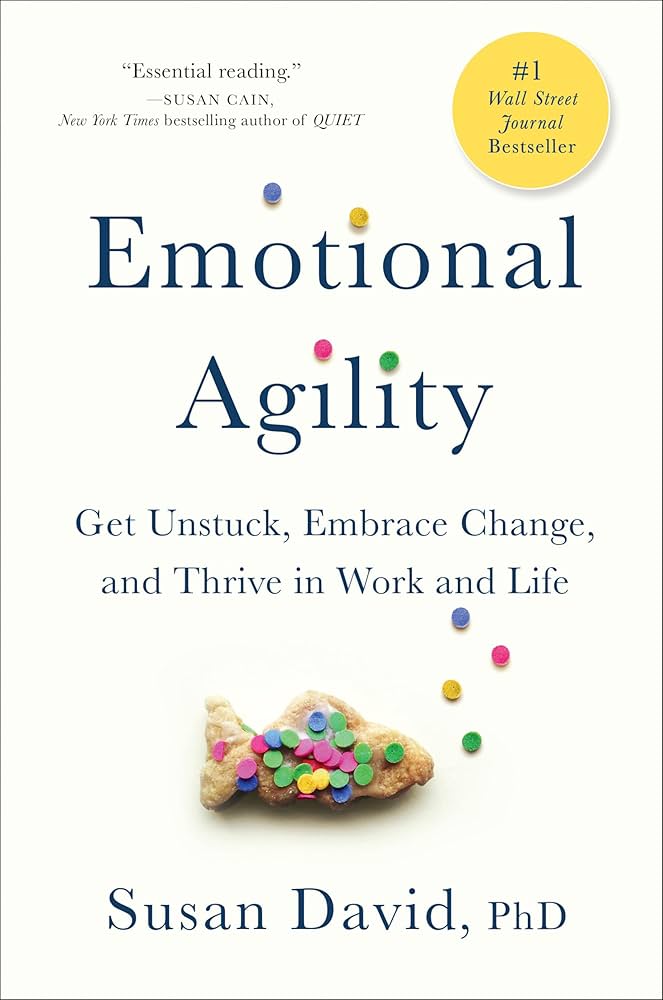
Dr. Susan David, a psychologist at Harvard Medical School and author of Emotional Agility, has transformed how we understand emotions. Her research shows that emotions are not problems to fix, but information to receive. The goal is not to suppress uncomfortable feelings or be ruled by them, but to acknowledge them with compassion and choose actions aligned with our values.
As a Reiki practitioner and hypnotherapist, I find her work deeply resonant. What she describes through psychology is something I witness every day through the body, the energy field, and the subconscious mind.
The Body Keeps the Score
One of the foundational steps in emotional agility is learning to name emotions with precision. Instead of saying “I feel awful,” Dr. David encourages us to notice the exact emotional blend—such as disappointment mixed with embarrassment. This specificity reduces emotional intensity and loosens its grip on the mind.
Hypnotherapy works in a similar way. Before a session begins, we establish an ideomotor response—a subtle, unconscious movement that allows the subconscious mind to communicate directly. This bypasses the conscious mind, which often overthinks or mislabels emotions.
A client may believe they feel anxious, yet the body reveals grief, excitement, or fear beneath the surface. Emotional agility gives us the language to describe what’s happening, while hypnotherapy allows us to access the deeper emotional truth stored in the body.
When Emotions Become Stuck in Energy
Dr. David also speaks about the danger of becoming “hooked” by emotions—allowing temporary feelings to turn into fixed stories about who we are. Suppressing or clinging to emotions prevents them from being fully processed.
From an energy‑healing perspective, emotions are experienced as movement within the energy field. When acknowledged, they flow and release naturally. When resisted, they can stagnate.
During Reiki sessions, this often appears as physical sensations: tightness in the throat linked to unexpressed truth, or heaviness in the shoulders reflecting emotional burden or responsibility. These sensations are not problems to eliminate; they are signals asking to be listened to.
By receiving emotions as information, rather than resisting them, we allow both the mind and the energy field to soften and rebalance.
How This Integration Shows Up in Everyday Life
At work, imposter syndrome often surfaces. Dr. David reframes this not as a flaw, but as information—evidence that we care deeply about competence and contribution. In hypnotherapy, we explore where this feeling lives in the body and communicate with the part holding it. Often, it’s a protective mechanism trying to prevent failure. When acknowledged, it can relax its grip. Reiki supports this shift by clearing energy related to self‑expression and personal power.
In relationships, criticism may trigger shame. Emotional agility invites us to name the feeling—“I’m noticing shame”—and respond with curiosity rather than defensiveness. Hypnotherapy can uncover where this shame first formed, often in early experiences. Reiki then helps integrate the healing, easing energetic contraction and restoring balance.
In personal growth, fear frequently appears at the edge of change. Rather than being a stop sign, fear can be a compass pointing toward growth. Hypnotherapy helps distinguish intuitive fear from conditioned fear, while Reiki grounds the body so forward movement feels supported rather than overwhelming.
A Simple Practice You Can Try
Notice a strong emotion without trying to change it.
Name it precisely (for example, “frustration mixed with sadness”).
Locate where it lives in your body.
Breathe gently into that space, allowing softening rather than forcing release.
Ask quietly, “What do you need me to know?”
Often, insight emerges naturally when emotions feel seen rather than managed.
The Deeper Truth of Emotional Agility
Whether we work through the mind, the body, or the energy field, one truth remains: emotions do not define us. We are the awareness that observes them.
Dr. Susan David’s work offers a compassionate, evidence‑based framework for navigating our inner world. Practices like hypnotherapy and Reiki provide experiential pathways into that same wisdom—helping us listen rather than resist, and transform rather than suppress.
When we stop fighting our emotions and begin receiving their messages, space opens for clarity, healing, and meaningful change.
https://gaianaturaltherapies.com/wp-content/uploads/2026/03/IMG_1310-e1773357928540.jpeg6040Deirdre Leightonhttps://gaianaturaltherapies.com/wp-content/uploads/2019/10/cropped-45798873_276683702986108_7749276086193618944_n.pngDeirdre Leighton2026-03-12 16:29:032026-03-12 16:29:04Beyond the Mind: Emotional Agility, Energy, and the Wisdom of the Body
Many people move through life with a quiet question humming beneath the surface: Why am I here? It often appears during times of loss, transition, illness, or deep change—not as an accident, but as an awakening. That inner whisper is not random; it is the echo of a purpose woven into your being long before you took your first breath. Bringing the new question: What is my purpose? While this feels big, the answer does not need to be overwhelming. Purpose is not always something we do; often, it is something we remember.
You were not placed here by accident. Your life carries meaning, even when it does not look the way you imagined it would. From a spiritual perspective, many traditions agree on this truth: life is intelligent. Whether you call it Source, Spirit, God, or the Universe, there is an organizing principle moving through all living things. Just as a seed knows how to grow into a tree, there is an inner knowing within you that guides your growth. The challenge is not that the plan is missing—it is that we are often taught to look outside ourselves for it.
Your purpose is not a destination to find, but a truth to recover.
It is not reserved for a chosen few, nor does it require perfection or constant clarity.
Purpose unfolds through lived experience—through values, choices, awareness, and how you meet yourself and others along the way.
Tapping into Who You are:
Self-empowerment begins when you stop waiting to be fixed, saved, or approved of, and instead begin listening inward. This inner listening speaks quietly through intuition, body sensations, subtle nudges, and even through what we often label as setbacks. Anxiety, illness, exhaustion, or disconnection are not failures; they are messages asking for attention and care. Psychiatrist Viktor Frankl taught that humans can endure almost anything if they have meaning (Man’s Search for Meaning). Meaning does not come from avoiding pain, but from how we relate to it. Your struggles are not proof you are off path. Often, they are the very terrain that shapes your wisdom, empathy, and strength.
Science echoes this understanding. Neuroscience shows that the brain is continually reshaping itself through awareness, belief, and intention—a process known as neuroplasticity (Doidge, The Brain That Changes Itself). This means you are not locked into old stories or patterns. With conscious attention, you can choose new responses, new beliefs, and new ways of being. Empowerment grows when you realize you are not broken—you are adaptable.
Co-Creative Conscious Collaboration
Spiritual awareness invites us to see life as a co-creative process. You have free will, and you also move within a larger, intelligent rhythm. The plan is not rigid or punishing; it is responsive. Each time you choose honesty over avoidance, compassion over judgment, and presence over fear, you align more deeply with your purpose. Purpose lives in how you show up—in conversations, in boundaries, in kindness, and in the courage to be authentic.
You do not need to know the entire path. You only need to recognize the next gentle step. Trust is built through relationship with yourself. When you slow down, breathe, and listen, clarity follows—not all at once, but in pieces that arrive when you are ready.
Your purpose is not something you must earn. It is already alive within you, expressed through what brings you alive, what moves your heart, and what feels true in your body. And the plan is not about becoming someone else—it is about becoming more fully who you already are.
You are here by sacred design. Your longings are clues. Your passions are fuel. Your presence matters. The plan is already in motion, and you—exactly as you are—are the one meant to fulfill it.
Listen to the whisper. Take the next step. You have a purpose. You have a plan. And it is unfolding through you, here and now.
This blog is dedicated to a dear client who has lived this life on a journey of his own sacred design. Thank you Geoff.
https://gaianaturaltherapies.com/wp-content/uploads/2026/01/Remembering-Your-Sacred-Journey.jpg8961600Deirdre Leightonhttps://gaianaturaltherapies.com/wp-content/uploads/2019/10/cropped-45798873_276683702986108_7749276086193618944_n.pngDeirdre Leighton2026-01-11 16:04:452026-02-13 13:47:41You Have a Purpose and a Plan:
https://gaianaturaltherapies.com/wp-content/uploads/2025/12/Grat-e1766520462725.png8201080Deirdre Leightonhttps://gaianaturaltherapies.com/wp-content/uploads/2019/10/cropped-45798873_276683702986108_7749276086193618944_n.pngDeirdre Leighton2025-12-27 14:31:592026-02-13 13:54:45Year in Reflection: Healing, Self-Empowerment, and the Conversations That Changed Us
We have all heard some version of this. It’s offered as a comfort when we’re in the thick of it—a well-meaning whisper against the roar of our worries. But in the moment, it can feel dismissive. Easy for you to say, themindreplies, clinging to its pain or fear as if it were a precious, terrible heirloom.
What if, instead of a platitude, we met this idea not as a dismissal of our feelings, but as the most honest and solid ground upon which to have those feelings? Not to bypass the storm, but to sit within it, knowing with absolute certainty that its nature is to pass.
This is the profound, often unsettling, truth of impermanence (Anicca) that sits at the heart of Buddhist philosophy. It states simply: all compounded things are in a constant state of flux. Everything that arises, ceases. This is not just about the “big” things—life, death, relationships—but about the very fabric of our experience, our existance. The itch on your nose, the joy from a text message, the sharp edge of grief, the weight of a deadline. They are all guests, arriving and departing on a schedule we do not control.
Our stress, then, rarely comes from the temporary event itself, but from a deep, often unconscious, argument we are having with this fundamental law. We suffer when we demand permanence from an impermanent world.
We want the good moment to freeze. We want the hard moment to have never happened. We want the person to stay, the feeling to last, the certainty to hold. In that wanting, we tense up. We clutch. We build mental fortresses against the tide of change, exhausting ourselves in a battle we were never meant to fight.
But what happens when we stop arguing? When we truly absorb this truth not as a source of anxiety, but as a profound liberation?
It reframes the entire conversation.
If nothing is permanent, then:
Our pain is not a life sentence. It is a season. This knowledge does not diminish its current reality, but it gently removes the terrifying “forever” from its description. Pain softens, not because it is ignored, but because it is allowed its natural lifespan.
Our joy becomes a gift to be received, not a possession to be hoarded. Its fleeting nature is what makes it precious. We are invited to sip the wine, not cork the bottle forever.
Our stuckness is an illusion. The feeling of being “trapped” in a circumstance or emotion is the mind’s trick of projecting the present moment infinitely forward. Impermanence is the quiet reminder: “Just wait. Watch. This too is moving.”
This understanding does not lead to passivity. It leads to a courageous, open-hearted engagement. When you know the storm will settle, you can focus on building a sturdy shelter for this moment, rather than railing against the sky. You can breathe through the anxiety, not as a way to escape it, but as a way to witness its rise and fall within you. You can stop clinging to what hurts, not by forcing it away, but by allowing it the space to move through and, in its own time, move on.
The philosopher Alan Watts often spoke of living like water—fluid, adaptable, yielding. Water does not stress about the temporary shape of the rock; it flows around it, wearing it down over time through gentle, persistent acceptance of the present landscape.
So this is the invitation: to consider impermanence not as a cold fact, but as a compassionate companion. It is the deep river that carries all things away, yes, but in doing so, it clears the space for what is new. It asks us the most freeing question of all:
If you were not spending your energy fighting the tide of change, what might you do with that precious, temporary breath?
The present moment—in all its messy, beautiful, fleeting glory—is not just all we have. It’s the only place where we can truly live. And its very temporary nature is what makes it sacred.
You have likely experienced it—the moment when you settle into a quiet room, hoping for tranquillity, only to notice a low, constant hum. This sound does not reside in your ears, but seems to echo deeper within your nervous system. It is the lingering effect of notifications, deadlines, and the relentless pace of a world that rarely powers down. What you sense is not true peace, but the noise of a soul that remains connected to the digital current. In the absence of external noise, this internal hum grows louder, reminding us that silence alone does not bring true quiet.
Why Nature, Not Silence, Provides Real Quiet
The solution to this modern hum is not simply more silence. Instead, it is found in the gentle sounds around us— the sounds of nature—the rustle of leaves, the rhythm of waves, and the whisper of the wind. True quiet is not achieved by eliminating noise, but by immersing ourselves into natural rhythms. To reconnect with these rhythms, patience is essential.
The Ghost in the Machine: Understanding the Internal Hum
This hum is not imaginary; it is the audible output of your mind’s workload. It represents the neurological residue from days filled with constant decision-making, multitasking, and exposure to the relentless barrage of screens and city sounds. Even when you step away from the hustle, your brain does not immediately unwind. The phenomenon is similar to switching off a loud fan—when the noise stops, you become aware of the ringing that was always present. This ringing is your nervous system still alert, scanning for threats and anticipating the next demand, waiting for an “all clear” signal.
Nature provides us this signal through its steady, undemanding rhythms. The call of birds, the movement of branches, and the rhythm of waves do not require anything from you. They invite you to rejoin the slower, ancient rhythms your body intuitively remembers.
The Great Unplugging: The Time It Takes to Unwind
Escaping into nature—a cabin in the woods or a retreat by the sea—may seem like the prescription for peace. However, the transition is not instant. On the first day, restlessness persists; the silence feels loud, and the hum remains. Research suggests that genuine unwinding takes time. In studies of vacationers, scientists observed that cortisol, the body’s main stress hormone, takes about three days to reach its lowest, most restful level.
The initial day serves as a detox, purging digital noise. The second day allows for recalibration; your senses begin to stretch and awaken. By the third day, a shift occurs—the mental fog lifts, the hum fades, and your perception sharpens. You start to notice small wonders again, like dew sparkling on moss or sunlight filtering through leaves. This is why short weekend getaways often feel insufficient; our nervous systems require more than a brief pause to rediscover their natural rhythm.
Nature: The Ultimate Unwinding Agent
Nature’s power to quiet the mind lies in its unique frequency, separate from the demands of modern life. Scientists refer to this as “soft fascination”—gentle, captivating patterns such as flickering candles, flowing water, or drifting clouds that engage our attention without overwhelming it. This allows the prefrontal cortex, the brain’s command centre, to rest and recover, forming the basis of Attention Restoration Theory.
Nature also offers a “sensory reset,” replacing artificial blue light with the greens and golds of sunlight, and mechanical buzzes with a living symphony of birdsong, wind, and water. These sensations communicate safety to your body, enabling true rest.
Furthermore, exposure to nature helps reset our internal clock. Circadian rhythms, guided by natural light, prompt the body to produce melatonin, deepen sleep, and restore hormonal balance. In nature, we move with time rather than resist it.
Your Prescription for a Quieter Mind
Recognizing that peace does not arrive instantly encourages a compassionate approach to stillness. Even a short walk in the park—twenty minutes among trees—can serve as a daily reset. Longer immersions, such as a three-day weekend or a week-long retreat, offer deeper restoration for your body and mind.
When you notice that familiar internal buzz, resist masking it with more noise. Instead, step outside and walk without digital distractions. Allow your mind to wander; welcome boredom as a doorway rather than a void.
Practices like earthing—standing barefoot on grass, soil, or sand—are thought to help rebalance the body’s electrical state. Whether or not you embrace the science, the sensation of cool grass beneath your feet or sand slipping through your toes is a primal anchor to the present moment.
Returning to Harmony
The aim is not to escape the world, but to return to it transformed—calmer, more balanced, and attuned. While the hum may never vanish completely, it can become gentler and more rhythmic, harmonizing with life instead of overwhelming it.
True peace is not found in perfect silence, but in the chorus of nature—the crickets at dusk, the waves on the shore, the wind in the leaves. It is in the timeless rhythm of your own heartbeat, finally in sync with the earth once again.
https://gaianaturaltherapies.com/wp-content/uploads/2025/12/peaceful-boat-on-water-e1764967898484.jpg4451210Deirdre Leightonhttps://gaianaturaltherapies.com/wp-content/uploads/2019/10/cropped-45798873_276683702986108_7749276086193618944_n.pngDeirdre Leighton2025-12-05 14:26:592026-02-13 13:55:55The Hum That Will Not Quit
Many people today feel overwhelmed by the endless healing trends and spiritual techniques available. This article explores why lasting healing doesn’t come from collecting more modalities, but from choosing one grounded path and going deeper with it. By drawing on ancient wisdom—from the chakras to the subconscious mind, from Reiki to shamanic practices—it shows how true transformation begins when we stop searching outside ourselves and start building a steady, rooted inner home. When we commit to one inspired path, we create the space for real harmony, clarity, and authentic healing to grow.
We navigate an era saturated with healing trends, a bustling marketplace offering temporary fixes for the enduring aches of the human soul. The modern paradigm teaches us to target symptoms, to silence the innate wisdom of our body’s cries without pausing to listen to their message. In our thirst for wholeness, we flit from one modality to the next, collecting techniques like charms on a bracelet, each one promising a completion that perpetually eludes us. This relentless seeking—this state of “modality chaos”—is not the solution but a profound symptom of the very disease it seeks to cure: a rootless disconnection from the sacred, stable center of our own being. We are drinking from a thousand shallow streams, yet our thirst remains, for we have not learned the way to the source.
True and lasting healing is not discovered in the next technique waiting on the horizon. It is found by returning to the perennial wisdom—the philosophia perennis—that forms the unshakable bedrock of the world’s great mystical traditions. From the Vedic seers to the Maya calendar keepers, from the Buddha’s profound insights to the Christ’s transformative teachings, a unified understanding of consciousness and its awakening has always existed beneath the surface of varied rituals and names. This is the core thesis we must embrace: to find the living water of authentic wellness, we must first cease our wandering and come home to the deep, timeless well of truth, learning the patient art of drawing from its infinite depths.
The Peril of the Pathless Path: Modality Chaos and the Illusion of Progress
The contemporary spiritual landscape, for all its gifts of accessibility, can inadvertently foster a subtle yet pervasive form of consumerism. We might sample a weekend of shamanic drumming, dabble in a Reiki attunement, diligently follow a meditation app, and intellectually absorb a treatise on Buddhism, all while maintaining a frantic pace of life that fundamentally contradicts the stillness to which these practices point. This scattershot approach creates what our ancestors would have recognized as a profound state of spiritual disharmony—a life out of tune with the natural order.
This stands in stark contrast to the ancient Maya concept of “beh”—the right road or path—which implies a dedicated, committed, and singular walk toward destiny. This sentiment is echoed in the Hindu Bhagavad Gita, where Lord Krishna counsels the warrior Arjuna against fickleness, stating, “The wisdom of a steadfast man is steady, while the thoughts of the unsteady wander in all directions.” Similarly, the Buddha’s Noble Eightfold Path is explicitly a path for a reason—it is a sequential, integrated, and holistic system of development, not a disconnected buffet from which we pick and choose at random based on fleeting desire.
This “modality chaos” creates a fractured inner landscape. Each healing system possesses its own language, its own map of reality. When we jump between them without a foundational home base, we risk creating a cacophony of conflicting concepts within our own psyche. We become spiritual tourists, snapping pictures of different vistas but never settling in to learn the language, feel the soil, and be genuinely transformed by a single, sacred place. This constant, restless seeking without the courage of deep finding becomes the ego’s final, clever refuge, keeping us perpetually in motion so we never have to arrive at the challenging, deep, and quiet work of integration that true healing demands.
The Ancestral Call to Harmony: First, Find Your Home
Across cultures and epochs, our ancestors spoke not of endless seeking, but of coming home. Their wisdom traditions are replete with calls for balance, harmony, and right relationship with all of existence. The Chinese sages devoted their lives to understanding and aligning with the Tao—the harmonious, ineffable Way of the universe. The Dine (Navajo) people strive for Hózhó, a complex and beautiful state of being that encompasses walking in beauty, harmony, balance, and everything that is good and positive. The ancient Greeks inscribed “Nothing in Excess” at the sacred temple of Delphi, a universal principle of moderation.
This universal principle of harmony is the direct antithesis of modality chaos. It offers us a simple but profound directive: Before you jump back into the wide river of knowledge, you must first choose a place on the bank to call home. It is there that you must build a dwelling, plant a garden, and learn the subtle seasons of that one chosen place. This act of commitment is the first and most crucial step toward genuine balance.
In a practical sense, this means consciously selecting one primary path—be it the chakra system as elaborated in Tantra, the mindful Eightfold Path of the Buddha, the symbolic architecture of the Kabbalistic Tree of Life, or the earth-honoring practices of a specific shamanic lineage—and committing to it as your foundational map for a significant period. This is not an act of closing yourself off to other streams of wisdom, but rather one of establishing a coherent center of gravity, a home port from which to navigate the vast ocean of knowledge. Your chosen path becomes your “home.” From this place of stability and cultivated depth, you can then look out at the wider river of knowledge with discernment. Now, when you encounter a teaching from another tradition, you can do so from a place of integration, asking, “How does this illuminate or complement my primary map?” rather than the desperate, rootless question, “Will this finally be the thing that fixes me?“
The Architecture of the Self: Ancient Maps for the Journey Home
To undertake this deeper healing, we must first apprentice ourselves to the universal architecture of the human being as meticulously described by the ancients. The chakra system, far from being a mere New Age concept, is a precise cosmological map originating from the Tantric and Vedic traditions of India. It describes nothing less than the journey of consciousness itself—the sacred ascent ofKundalini Shakti, the coiled spiritual energy, from the root of material existence (Muladhara) to the crown of divine union and realization (Sahastrara). It is, therefore, a map of spiritual awakening, where healing is redefined as the process of purifying and clearing the stagnation to this innate, evolutionary flow of energy and awareness.
Simultaneously, our modern understanding of the subconscious mind finds its profound echo in ancient concepts. In Yogacara Buddhism, it is the Alaya-vijñana, or Storehouse Consciousness, a foundational layer of mind that stores all karmic seeds (bija) from which our experiences sprout. In the mystical Jewish tradition of the Kabbalah, this is the realm of Nephesh, the vital soul that houses our instinctual and conditioned nature. The Maya shamans spoke of accessing the Nagual, the non-ordinary, potential reality that underlies the world of everyday form. Across these traditions, a unified understanding emerges: beneath the surface of our conscious, egoic identity lies a vast, formative, and powerful realm that actively shapes our perceived reality. The critical insight for healing is that these two systems—the vertical axis of the chakras and the hidden depth of the subconscious—are intimately and dynamically linked. The chakras can be understood as the sacred stations where cosmic energy and personal karma interact; they are the precise points where our subconscious conditioning becomes crystallized into tangible energetic patterns, which eventually manifest as our physical, emotional, and mental states of being.
Connecting the Dots: Modalities as Modern Expressions of Ancient Mysteries
When we view contemporary healing practices through this integrated lens—and from the stable ground of our chosen “home”—they transform from disparate techniques into direct descendants of these ancient mystical sciences. Chakra Therapy reveals itself as applied Tantra. It is the practical, physical application of a sophisticated system originally designed for moksha, or spiritual liberation. By consciously working with the chakras, we are not merely “balancing energy” in a mechanical sense; we are engaging in a sacred somatic process of purifying the koshas, the successive sheaths of the body, to allow the inherent light of pure consciousness (Atman) to shine through unobstructed by past traumas and conditioning.
Similarly, Hypnotherapy can be understood as a Western gateway to the timeless shamanic journey. The therapeutic trance state is fundamentally the same altered state of consciousness sought by the Maya h’men, the Siberian baxsi, or the Grecian oracle at Delphi. It is a deliberate and skilled descent into the Nagual, the Alaya-vijñana, or the Nephesh to perform essential spiritual tasks: to retrieve lost soul parts, to reframe powerful karmic imprints (samskaras), and to engage in direct dialogue with the deeper, wiser Self. It is, in essence, a modern technology for achieving what the Buddha termed seeing “things as they are” (yathābhūtaṃ), by allowing us to look directly and fearlessly at the contents of our own mind.
Likewise, Reiki and similar energy practices are the conscious channeling of Prana or Qi—the universal life force that animates all creation. This concept of a healing, intelligent energy that permeates and connects all things is utterly foundational to ancient wisdom. In Sanskrit, it is Prana; in Chinese philosophy and medicine, it is Qi; for the Maya, it is K’uy; in Hawaiian tradition, it is Mana. The Reiki practitioner, therefore, acts as a conscious conduit for this universal force, much as a Sufi mystic channels Barakah (divine blessing) or a Christian mystic serves as a vessel for the Holy Spirit. The laying on of hands is a practice as old as human compassion itself, a physical sacrament facilitating a spiritual transmission. When these modalities are used in concert, and from a place of integrated understanding, they form a complete and powerful initiatory circuit: the Tantric map reveals the location of the karmic knot, the shamanic key of hypnotherapy unlocks the story and emotion held within it, and the mystic current of Reiki clears the pathway for grace, allowing a new, liberated, and harmonious pattern to emerge into being.
The Journey Back to the Source: From Seeking to Dwelling
The reclamation of this timeless wisdom requires a fundamental shift in our orientation: from the exhausting stance of a perpetual seeker to the grounded, empowered posture of a dweller. It is to embark on your own mystical journey from a stable home, heeding the ancestral call to harmony.
The first step is to Choose Your Home deliberately, not desperately. This requires a period of sincere exploration and study of the great maps of consciousness. Does the heart-centered, mindful philosophy of the Buddha resonate most deeply with your soul? Does the intricate, cosmic structure of the Kabbalah fire your imagination? Are you called to the earth-honoring, cyclical ways of a shamanic path? Make a conscious choice and then commit to studying it with depth for a dedicated period—a year, for instance. This is how you build your dwelling on the bank of the river of knowledge.
Then, with your home chosen, the next step is to Dig Your Well. This is the deep, often unglamorous work of the path. It involves practicing the core meditations until they become second nature, learning the core prayers or invocations, and studying the primary texts until their wisdom begins to live within you. This is the work of digging your well. It is quiet, repetitive, and demands patience, but it is the only process that reliably brings you to the water of direct experience and understanding, far beyond mere intellectual knowledge.
Then, and only then, from the peace and substance of your established home, can you truly Welcome the Traveler. With a solid foundation in one tradition, you can now encounter other wisdom streams as an honored guest, not as a desperate refugee. A teaching from the Tao Te Ching can brilliantly illuminate your understanding of the lower chakras. A soaring Sufi poem can lend new depth and passion to your meditation. In this grounded state, the river of knowledge ceases to be a threat and becomes a source of nourishment, bringing enriching insights to the garden you have so tenderly cultivated, rather than washing you and your efforts away in a flood of conflicting information.
Conclusion: The One River, The Many Wells
The frantic search for the next healing trend is ultimately a distraction from the one, eternal river of truth that has flowed through all ages. The chaos of jumping from modality to modality is a distinctly modern affliction, one that would be foreign to our ancestors who so deeply prized harmony, depth, and rootedness. The chakra system, the subconscious, and the flow of life force are not modern inventions but rediscoveries of universal constants of spiritual experience, meticulously described by the mystics, sages, and shamans of every culture.
The well of perennial wisdom is deep, and its waters are eternally pure. They are the same waters that quenched the thirst of the Buddha under the Bodhi tree, the Rishi in deep meditation, and the Christ in the desert. But to drink, you must first stop running along the bank. You must choose your well. You must settle there. You must dig deep. In that conscious commitment, in that courageous act of coming home to a single truth, you will find not the limitation you feared, but the boundless freedom, harmony, and authentic wholeness you have been seeking all along.
Final Step: Your Call to Action
Take a quiet moment to look honestly at your own journey. Have you been a tourist or a dweller? Identify the one, recurring knot in your life—be it anxiety, a relationship pattern, a creative block—that calls most loudly for healing. See it now not as a flaw to be frantically fixed by the next trend, but as the very site, the sacred ground, where you are being called to build your home, to dig your well, and to finally, fully, come home to yourself. The sacred journey from chaos to harmony begins not with another search, but with a single, steadfast, and courageous choice.
https://gaianaturaltherapies.com/wp-content/uploads/2025/11/IMG_0759-scaled.jpg17072560Deirdre Leightonhttps://gaianaturaltherapies.com/wp-content/uploads/2019/10/cropped-45798873_276683702986108_7749276086193618944_n.pngDeirdre Leighton2025-11-18 14:24:472026-02-13 13:56:40The Well and the Water: Reclaiming Timeless Healing Wisdom
We live in a world where the pursuit of wellness can often feel like just another item on the never-ending to-do list. Juggling deadlines and managing relationships, all while trying to maintain our health. Leaving us feeling disconnected and drained. Well-being becomes a source of pressure rather than peace. But: what if healing was a place of rest, not another catalog of tasks? What if it was less about doing and more about being?
This fundamental shift is at the heart of the pioneering work of Dr. Richard A. JelusichIntegrative Chakra Therapy® (ICT). An approach that moves beyond generic energy healing. ICT presents a revolutionary idea: the seven main chakras are not merely abstract energy centers, but distinct, functional centers of consciousness! Each governing specific aspects of our psychological and emotional being, offering a practical map for self-understanding. The aim is not to add spiritual tasks, but to help you resolve stress and imbalance at their core within your psyche.
The Inner Shift: From Reactivity to Conscious Awareness
Many are initially drawn to Integrative Chakra Therapy® seeking relief from anxiety or chronic stress, and they find it. However, the process is far more profound than simple relaxation. It is a transformative journey from unconscious reactivity to conscious, compassionate awareness.
For example, when your root chakra—the center of safety—holds fear, it can trigger constant anxiety and keep your body in a “fight-or-flight” state. An ICT session brings gentle, conscious attention to this fear, helping release deep wounds and allowing your nervous system to shift from survival to a sense of grounded security.
This initial shift creates the space for profound self-awareness. You might begin to see that your recurring throat chakra issues—such as frequent sore throats or a chronic difficulty in comprehending your truth—are not random occurrences. Instead, they are directly linked to a deeper pattern of stifled self-expression originating in your solar plexus chakra, the seat of your personal power.
What appears on the surface as a physical symptom is, in reality, a poignant conversation between your centers of awareness. Integrative Chakra Therapy® gives you the lexicon to decode this conversation, allowing you to heal the root emotional conflict rather than just repeatedly soothing the surface-level manifestation.
The Modern Medical Bridge: A Partner in Whole-Person Health
ICT’s true strength lies in its alignment with modern healthcare models like Integrative and Functional Medicine, making it a valuable, evidence-informed partner in whole-person care.
In Integrative Medicine, the goal is to blend the best of conventional treatments with validated complementary therapies. Here, Integrative Chakra Therapy® serves as a vital ally to address the profound psychological and emotional toll of illness. For a patient undergoing chemotherapy, work with the solar plexus chakra can be instrumental in restoring a sense of personal power and agency. Similarly, focusing on the heart chakra can help process the grief and fear of a new diagnosis, fostering essential self-compassion.
In Functional Medicine, the focus is laser-sharp: uncover and address the root causes of disease, with chronic stress being a primary culprit. Integrative Chakra Therapy® offers a precise map for this very investigation. A Functional Medicine practitioner might identify that a patient’s elevated cortisol levels and related digestive issues are fueled by deeper, perceived lack of safety and low self-worth. By using chakra work to address these core psychological drivers, ICT helps create a lasting shift in the autonomic nervous system. It becomes a strategic tool for actively rewiring the underlying stress patterns that disrupt hormonal balance, gut health, and immune function.
The Future is Whole-Person Care
We are collectively moving away from an outdated model that treats the physical body in isolation. The future of healing honors the full human experience—body, mind, spirit, and the conscious energy systems that connect them all.
Integrative Chakra Therapy®, as defined by Dr. Jelusich, is perfectly poised for this new era. It provides both a language and a method for exploring the inner dimensions of health. It empowers you to become a conscious architect of your own well-being, not by adding more tasks, but by illuminating the deep connections between your psychological patterns and your physical state. This process restores balance and fosters a deep, trusting connection to your own inner wisdom.
True healing, as ICT reveals, is not a sudden transformation but a gentle unfolding—a remembering of your innate harmony. In this remembering, well-being is no longer a goal to chase but a natural state of being to reclaim.
Stress touches every single one of us. Some days it’s a background hum; other days it builds layer by layer until it feels like we’re carrying an invisible weight that no one else can see. While we can’t always remove the sources of stress, we can pause and weave small breaks into our day—moments that allow our bodies and minds to reset. What follows is not a prescription but an example: a window into one person’s day, showing how stress can accumulate and how practices like Reiki, breathwork, grounding, and hypnotherapy can help lighten the load.
Morning: Waking Into the Weight
The buzz of my alarm doesn’t just wake me up; it jumpstarts a low hum of dread. Even before my eyes are open, the mental checklist begins: deadlines, unanswered emails, a news cycle that promises more worry. I feel it first in my body—a tightness in my jaw, a knot between my shoulder blades. My nervous system is already in fight-or-flight, preparing for a day of digital dragons and inbox avalanches. It’s not designed for this. It’s designed to outrun a predator, not process 50 notifications before breakfast.
Stress itself isn’t the enemy. It’s ancient, brilliant machinery that has kept humanity alive. But in our modern lives, this system never gets the “all clear” signal. Chronic stress grinds us down—mentally, emotionally, physically. I feel like Frodo carrying the Ring—the weight invisible to others, but with each step, it grows heavier, clouding hope and draining my spirit.
Midday: Meeting the Dragons
By lunchtime, the hum has become a roar. A tense conversation leaves me feeling defensive. Scrolling through headlines, a cold emptiness settles in my chest. It’s the same suffocating feeling that J.K. Rowling described with the Dementors in Harry Potter—they don’t just bring fear, they drain joy. That’s what digital overwhelm and collective anxiety feel like.
Mine isn’t a spell, but it does come from within. I place one hand on my heart and one on my stomach—a simple Reiki practice. I breathe: in for four, hold for four, out for four. Once, twice, three times. The knot in my shoulders loosens. The Dementor’s grip eases. Stress hasn’t disappeared, but I remember: I carry light inside me.
Reflection: What’s your Patronus in daily life? Maybe it’s stepping outside for air, listening to music, or practicing Reiki or mindfulness. Small rituals are powerful spells against overwhelm.
The Afternoon Lull: The Context We Carry
By mid-afternoon, the weight isn’t just my to-do list. It’s everything—the rising costs, the fragile world, the lingering health worries. Some days it feels like the Nothing in The NeverEnding Story, swallowing hope and meaning.
But in that tale, the Nothing was resisted not by force, but by imagination, belief, and naming the truth. That reminder pulls me back into choice. I close the news tab and ground myself: five things I see, four I touch, three I hear, two I smell, one I taste. Slowly, my senses anchor me back into the present.
This is where cultural context matters. Many of us are walking around with layered stress—personal, societal, collective. Stress management today isn’t about escape; it’s about tools that help us meet reality with resilience. Reiki, meditation, breathwork, hypnotherapy—these aren’t luxuries, they’re lifelines.
Reflection: The world outside may not change quickly, but the world inside you can. Which practices help you return to yourself when the “Nothing” feels close?
Evening: Listening Differently
At home, the residue of the day clings to me. I used to feel like a failure for not being able to “just relax.” Now, I see it differently. Like in Pixar’s Inside Out, stress and anxiety aren’t enemies to banish—they’re messengers. Stress whispers: you’re carrying too much. Fear says: I want to keep you safe. My role is to listen, not to silence them.
This is where journaling helps. I ask: What are you trying to teach me? Sometimes, I need more support, and that’s where hypnotherapy comes in. It’s like conversing directly with my subconscious, gently rewriting old stress patterns so a single trigger doesn’t unravel the whole day.
Night: Weaving a Way Back to Balance
Before bed, I return to Reiki hand positions—heart and belly. I imagine release, balance, and a soft inner garden where peace is possible. It isn’t about perfect calm but about weaving threads of care through the day: a mindful breath, a grounding walk, a journaling pause.
Stress will never disappear. But when we build small, steady practices, we learn to carry it differently. The weight remains—but so does our way through it.
As I lie down, I whisper to the tired part of myself: I am safe. I am here. I am enough.
And that makes all the difference.
Closing Thought: Stress is universal, but the way we respond to it is deeply personal. Just as heroes in stories find allies and tools along their journey, we too can discover practices—Reiki, hypnotherapy, mindfulness—that empower us to transform the burden into resilience.
https://gaianaturaltherapies.com/wp-content/uploads/2025/10/stress-release_weight.jpg8961600Deirdre Leightonhttps://gaianaturaltherapies.com/wp-content/uploads/2019/10/cropped-45798873_276683702986108_7749276086193618944_n.pngDeirdre Leighton2025-10-03 13:00:592026-02-13 13:57:54The Weight and the Way: A Personal Journey Through Stress
There are moments in life when what we need most is not advice, solutions, or even words, but the gift of being truly heard. To be listened to with presence and compassion is to feel seen at the deepest level of our being. This is the essence of what Zen Master Thich Nhat Hanh called “deep listening”—a practice that nurtures understanding and, in turn, allows love to flourish.
What Is Deep Listening?
Deep listening is more than hearing words. It is listening with the intent to understand, not to respond or fix. It asks us to put aside our judgments, assumptions, and the urge to offer quick solutions. Instead, it invites us to listen with presence, patience, and compassion.
When we listen deeply, we are not waiting for our turn to speak. We are creating a safe and sacred space where another person feels truly seen and heard. In that space, healing becomes possible.
Deep listening involves being fully present in the moment, giving our undivided attention to the speaker. It means observing not just the words, but also the emotions and body language that accompany them. This level of attentiveness allows us to connect with the speaker on a deeper level, fostering empathy and understanding.
Moreover, deep listening requires us to silence our inner dialogue and resist the temptation to interrupt or interject. It is about embracing silence and allowing the speaker to express themselves fully without fear of judgment or interruption. This practice can lead to profound insights and a stronger sense of connection between individuals.
In essence, deep listening is an act of love and respect. It acknowledges the inherent worth of the speaker and honors their experience. By practicing deep listening, we can build stronger, more meaningful relationships and create a more compassionate and understanding world.
Why Compassion Matters in Listening
Compassion transforms listening from a passive act into an act of love. If someone shares their pain and we meet it with judgment, dismissal, or distraction, the door to trust closes. But when we listen with compassion, we acknowledge their humanity without trying to change it.
For instance, imagine a friend confiding in you about a recent loss. Instead of offering quick solutions or diverting the conversation, you simply listen, nodding and offering words of empathy like, “I’m so sorry you’re going through this.”
This does not mean we agree with everything we hear, nor does it mean we must carry the burden of fixing someone’s problems. Compassionate listening simply allows a person’s truth to exist without interruption or invalidation. That alone can be deeply healing.
The Connection Between Understanding and Love
As Thich Nhat Hanh teaches, love is born from understanding. Without understanding, love can feel shallow or conditional. True love grows when we make the effort to understand the other’s joys, fears, wounds, and dreams.
Think of a child who misbehaves. If a parent only sees the behavior without listening for the pain or unmet need behind it, the response may be anger or punishment. But if the parent listens deeply—with compassion—they may discover loneliness, fear, or a longing for connection. Understanding transforms the way love is expressed.
The same is true in friendships and partnerships. When we listen deeply, we begin to see the whole person before us, not just the surface of their words. That deeper seeing is what sustains love.
How to Practice Deep Listening
Like any meaningful practice, deep listening requires intention and consistency. Here are a few gentle ways to begin:
Create space. Put away distractions and give your full attention. Silence your phone, make eye contact, and show with your body language that you are present.
Listen without interruption. Allow the other person to speak without rushing in to respond, defend, or advise. Sometimes silence is the most supportive response.
Listen Without Judgment: Accept the speaker’s feelings and experiences without evaluating or criticizing them.
Listen beneath the words. Pay attention to tone, emotion, and what is left unsaid. Often, the heart of the message lies between the lines. Try to understand the speaker’s perspective and validate their emotions.
Reflect back gently – empathize. If appropriate, paraphrase what the speaker has said to ensure understanding and show that you are listening.: “It sounds like you’re feeling…” This shows the speaker that you are engaged and seeking to understand.
Hold compassion. Remember that everyone carries unseen struggles. Approach their words with kindness rather than judgment.
Deep Listening as a Form of Healing
In holistic and therapeutic work, deep listening is not just a tool but a foundation. When someone feels deeply heard, they begin to release long-held emotions, opening the door to self-awareness and healing.
This is why deep listening is often called a form of love in action. It requires no special training, only willingness. Yet its impact can be profound: relationships soften, misunderstandings ease, and love has room to grow.
Building Stronger Relationships
Deep listening can also strengthen relationships. When we listen deeply to others, we show them that we care about their thoughts and feelings. This can lead to greater trust and intimacy in relationships. Misunderstandings can be resolved more easily, and conflicts can be navigated with greater empathy and compassion.
A Gentle Invitation to You
Deep listening is not always easy. It asks us to set aside our ego, our need to be right, and even our discomfort with silence. But when practiced with patience and sincerity, it becomes one of the greatest gifts we can offer.
Imagine a world where parents listened deeply to their children, where friends listened without judgment, and where communities listened across differences. In such a world, compassion would flourish, and love would no longer be scarce—it would be the natural language of connection.
As Thich Nhat Hanh reminds us, to listen deeply is to love deeply. And perhaps that is exactly what our world needs most.
So, why not take a moment today to practice deep listening—with yourself. Sit quietly, breathe, and listen to the emotions within you without judgment. By listening inward with compassion, you prepare your heart to listen outward with love.
https://gaianaturaltherapies.com/wp-content/uploads/2025/09/Active-Listening-2-e1758761491598.jpg10431200Deirdre Leightonhttps://gaianaturaltherapies.com/wp-content/uploads/2019/10/cropped-45798873_276683702986108_7749276086193618944_n.pngDeirdre Leighton2025-09-24 18:13:042026-02-13 14:00:20The Art of Deep Listening: The Pathway to True Connection
We may request cookies to be set on your device. We use cookies to let us know when you visit our websites, how you interact with us, to enrich your user experience, and to customize your relationship with our website.
Click on the different category headings to find out more. You can also change some of your preferences. Note that blocking some types of cookies may impact your experience on our websites and the services we are able to offer.
Essential Website Cookies
These cookies are strictly necessary to provide you with services available through our website and to use some of its features.
Because these cookies are strictly necessary to deliver the website, refusing them will have impact how our site functions. You always can block or delete cookies by changing your browser settings and force blocking all cookies on this website. But this will always prompt you to accept/refuse cookies when revisiting our site.
We fully respect if you want to refuse cookies but to avoid asking you again and again kindly allow us to store a cookie for that. You are free to opt out any time or opt in for other cookies to get a better experience. If you refuse cookies we will remove all set cookies in our domain.
We provide you with a list of stored cookies on your computer in our domain so you can check what we stored. Due to security reasons we are not able to show or modify cookies from other domains. You can check these in your browser security settings.
Google Analytics Cookies
These cookies collect information that is used either in aggregate form to help us understand how our website is being used or how effective our marketing campaigns are, or to help us customize our website and application for you in order to enhance your experience.
If you do not want that we track your visit to our site you can disable tracking in your browser here:
Other external services
We also use different external services like Google Webfonts, Google Maps, and external Video providers. Since these providers may collect personal data like your IP address we allow you to block them here. Please be aware that this might heavily reduce the functionality and appearance of our site. Changes will take effect once you reload the page.
Google Webfont Settings:
Google Map Settings:
Google reCaptcha Settings:
Vimeo and Youtube video embeds:
Other cookies
The following cookies are also needed - You can choose if you want to allow them: