The Well and the Water: Reclaiming Timeless Healing Wisdom
A Personal Article:
Many people today feel overwhelmed by the endless healing trends and spiritual techniques available. This article explores why lasting healing doesn’t come from collecting more modalities, but from choosing one grounded path and going deeper with it. By drawing on ancient wisdom—from the chakras to the subconscious mind, from Reiki to shamanic practices—it shows how true transformation begins when we stop searching outside ourselves and start building a steady, rooted inner home. When we commit to one inspired path, we create the space for real harmony, clarity, and authentic healing to grow.
We navigate an era saturated with healing trends, a bustling marketplace offering temporary fixes for the enduring aches of the human soul. The modern paradigm teaches us to target symptoms, to silence the innate wisdom of our body’s cries without pausing to listen to their message. In our thirst for wholeness, we flit from one modality to the next, collecting techniques like charms on a bracelet, each one promising a completion that perpetually eludes us. This relentless seeking—this state of “modality chaos”—is not the solution but a profound symptom of the very disease it seeks to cure: a rootless disconnection from the sacred, stable center of our own being. We are drinking from a thousand shallow streams, yet our thirst remains, for we have not learned the way to the source.
True and lasting healing is not discovered in the next technique waiting on the horizon. It is found by returning to the perennial wisdom—the philosophia perennis—that forms the unshakable bedrock of the world’s great mystical traditions. From the Vedic seers to the Maya calendar keepers, from the Buddha’s profound insights to the Christ’s transformative teachings, a unified understanding of consciousness and its awakening has always existed beneath the surface of varied rituals and names. This is the core thesis we must embrace: to find the living water of authentic wellness, we must first cease our wandering and come home to the deep, timeless well of truth, learning the patient art of drawing from its infinite depths.
The Peril of the Pathless Path: Modality Chaos and the Illusion of Progress
The contemporary spiritual landscape, for all its gifts of accessibility, can inadvertently foster a subtle yet pervasive form of consumerism. We might sample a weekend of shamanic drumming, dabble in a Reiki attunement, diligently follow a meditation app, and intellectually absorb a treatise on Buddhism, all while maintaining a frantic pace of life that fundamentally contradicts the stillness to which these practices point. This scattershot approach creates what our ancestors would have recognized as a profound state of spiritual disharmony—a life out of tune with the natural order.

This stands in stark contrast to the ancient Maya concept of “beh”—the right road or path—which implies a dedicated, committed, and singular walk toward destiny. This sentiment is echoed in the Hindu Bhagavad Gita, where Lord Krishna counsels the warrior Arjuna against fickleness, stating, “The wisdom of a steadfast man is steady, while the thoughts of the unsteady wander in all directions.” Similarly, the Buddha’s Noble Eightfold Path is explicitly a path for a reason—it is a sequential, integrated, and holistic system of development, not a disconnected buffet from which we pick and choose at random based on fleeting desire.
This “modality chaos” creates a fractured inner landscape. Each healing system possesses its own language, its own map of reality. When we jump between them without a foundational home base, we risk creating a cacophony of conflicting concepts within our own psyche. We become spiritual tourists, snapping pictures of different vistas but never settling in to learn the language, feel the soil, and be genuinely transformed by a single, sacred place. This constant, restless seeking without the courage of deep finding becomes the ego’s final, clever refuge, keeping us perpetually in motion so we never have to arrive at the challenging, deep, and quiet work of integration that true healing demands.
The Ancestral Call to Harmony: First, Find Your Home
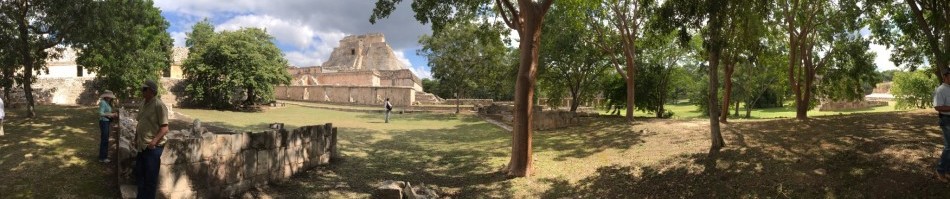
Across cultures and epochs, our ancestors spoke not of endless seeking, but of coming home. Their wisdom traditions are replete with calls for balance, harmony, and right relationship with all of existence. The Chinese sages devoted their lives to understanding and aligning with the Tao—the harmonious, ineffable Way of the universe. The Dine (Navajo) people strive for Hózhó, a complex and beautiful state of being that encompasses walking in beauty, harmony, balance, and everything that is good and positive. The ancient Greeks inscribed “Nothing in Excess” at the sacred temple of Delphi, a universal principle of moderation.
This universal principle of harmony is the direct antithesis of modality chaos. It offers us a simple but profound directive: Before you jump back into the wide river of knowledge, you must first choose a place on the bank to call home. It is there that you must build a dwelling, plant a garden, and learn the subtle seasons of that one chosen place. This act of commitment is the first and most crucial step toward genuine balance.
In a practical sense, this means consciously selecting one primary path—be it the chakra system as elaborated in Tantra, the mindful Eightfold Path of the Buddha, the symbolic architecture of the Kabbalistic Tree of Life, or the earth-honoring practices of a specific shamanic lineage—and committing to it as your foundational map for a significant period. This is not an act of closing yourself off to other streams of wisdom, but rather one of establishing a coherent center of gravity, a home port from which to navigate the vast ocean of knowledge. Your chosen path becomes your “home.” From this place of stability and cultivated depth, you can then look out at the wider river of knowledge with discernment. Now, when you encounter a teaching from another tradition, you can do so from a place of integration, asking, “How does this illuminate or complement my primary map?” rather than the desperate, rootless question, “Will this finally be the thing that fixes me?“
The Architecture of the Self: Ancient Maps for the Journey Home

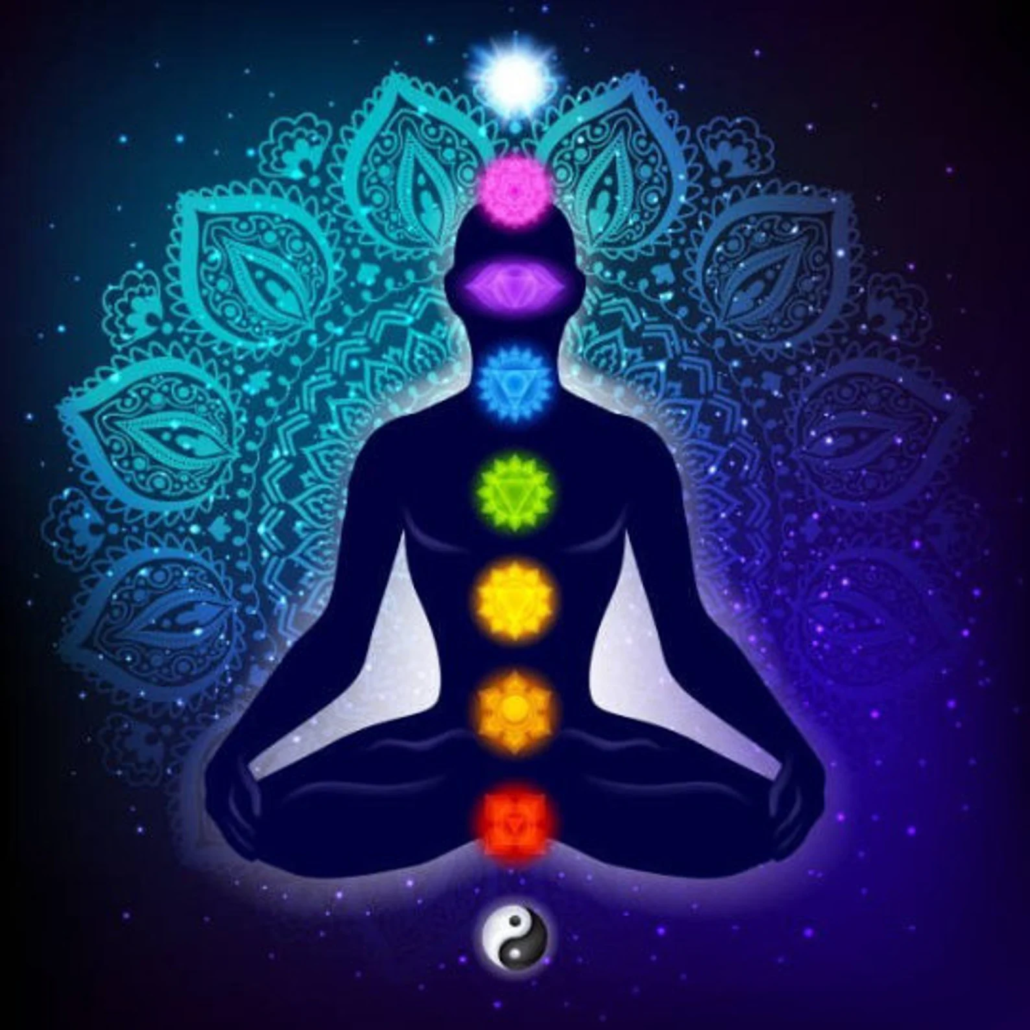
To undertake this deeper healing, we must first apprentice ourselves to the universal architecture of the human being as meticulously described by the ancients. The chakra system, far from being a mere New Age concept, is a precise cosmological map originating from the Tantric and Vedic traditions of India. It describes nothing less than the journey of consciousness itself—the sacred ascent of Kundalini Shakti, the coiled spiritual energy, from the root of material existence (Muladhara) to the crown of divine union and realization (Sahastrara). It is, therefore, a map of spiritual awakening, where healing is redefined as the process of purifying and clearing the stagnation to this innate, evolutionary flow of energy and awareness.
Simultaneously, our modern understanding of the subconscious mind finds its profound echo in ancient concepts. In Yogacara Buddhism, it is the Alaya-vijñana, or Storehouse Consciousness, a foundational layer of mind that stores all karmic seeds (bija) from which our experiences sprout. In the mystical Jewish tradition of the Kabbalah, this is the realm of Nephesh, the vital soul that houses our instinctual and conditioned nature. The Maya shamans spoke of accessing the Nagual, the non-ordinary, potential reality that underlies the world of everyday form. Across these traditions, a unified understanding emerges: beneath the surface of our conscious, egoic identity lies a vast, formative, and powerful realm that actively shapes our perceived reality. The critical insight for healing is that these two systems—the vertical axis of the chakras and the hidden depth of the subconscious—are intimately and dynamically linked. The chakras can be understood as the sacred stations where cosmic energy and personal karma interact; they are the precise points where our subconscious conditioning becomes crystallized into tangible energetic patterns, which eventually manifest as our physical, emotional, and mental states of being.
Connecting the Dots: Modalities as Modern Expressions of Ancient Mysteries
When we view contemporary healing practices through this integrated lens—and from the stable ground of our chosen “home”—they transform from disparate techniques into direct descendants of these ancient mystical sciences. Chakra Therapy reveals itself as applied Tantra. It is the practical, physical application of a sophisticated system originally designed for moksha, or spiritual liberation. By consciously working with the chakras, we are not merely “balancing energy” in a mechanical sense; we are engaging in a sacred somatic process of purifying the koshas, the successive sheaths of the body, to allow the inherent light of pure consciousness (Atman) to shine through unobstructed by past traumas and conditioning.
Similarly, Hypnotherapy can be understood as a Western gateway to the timeless shamanic journey. The therapeutic trance state is fundamentally the same altered state of consciousness sought by the Maya h’men, the Siberian baxsi, or the Grecian oracle at Delphi. It is a deliberate and skilled descent into the Nagual, the Alaya-vijñana, or the Nephesh to perform essential spiritual tasks: to retrieve lost soul parts, to reframe powerful karmic imprints (samskaras), and to engage in direct dialogue with the deeper, wiser Self. It is, in essence, a modern technology for achieving what the Buddha termed seeing “things as they are” (yathābhūtaṃ), by allowing us to look directly and fearlessly at the contents of our own mind.
Likewise, Reiki and similar energy practices are the conscious channeling of Prana or Qi—the universal life force that animates all creation. This concept of a healing, intelligent energy that permeates and connects all things is utterly foundational to ancient wisdom. In Sanskrit, it is Prana; in Chinese philosophy and medicine, it is Qi; for the Maya, it is K’uy; in Hawaiian tradition, it is Mana. The Reiki practitioner, therefore, acts as a conscious conduit for this universal force, much as a Sufi mystic channels Barakah (divine blessing) or a Christian mystic serves as a vessel for the Holy Spirit. The laying on of hands is a practice as old as human compassion itself, a physical sacrament facilitating a spiritual transmission. When these modalities are used in concert, and from a place of integrated understanding, they form a complete and powerful initiatory circuit: the Tantric map reveals the location of the karmic knot, the shamanic key of hypnotherapy unlocks the story and emotion held within it, and the mystic current of Reiki clears the pathway for grace, allowing a new, liberated, and harmonious pattern to emerge into being.
The Journey Back to the Source: From Seeking to Dwelling
The reclamation of this timeless wisdom requires a fundamental shift in our orientation: from the exhausting stance of a perpetual seeker to the grounded, empowered posture of a dweller. It is to embark on your own mystical journey from a stable home, heeding the ancestral call to harmony.
The first step is to Choose Your Home deliberately, not desperately. This requires a period of sincere exploration and study of the great maps of consciousness. Does the heart-centered, mindful philosophy of the Buddha resonate most deeply with your soul? Does the intricate, cosmic structure of the Kabbalah fire your imagination? Are you called to the earth-honoring, cyclical ways of a shamanic path? Make a conscious choice and then commit to studying it with depth for a dedicated period—a year, for instance. This is how you build your dwelling on the bank of the river of knowledge.
Then, with your home chosen, the next step is to Dig Your Well. This is the deep, often unglamorous work of the path. It involves practicing the core meditations until they become second nature, learning the core prayers or invocations, and studying the primary texts until their wisdom begins to live within you. This is the work of digging your well. It is quiet, repetitive, and demands patience, but it is the only process that reliably brings you to the water of direct experience and understanding, far beyond mere intellectual knowledge.
Then, and only then, from the peace and substance of your established home, can you truly Welcome the Traveler. With a solid foundation in one tradition, you can now encounter other wisdom streams as an honored guest, not as a desperate refugee. A teaching from the Tao Te Ching can brilliantly illuminate your understanding of the lower chakras. A soaring Sufi poem can lend new depth and passion to your meditation. In this grounded state, the river of knowledge ceases to be a threat and becomes a source of nourishment, bringing enriching insights to the garden you have so tenderly cultivated, rather than washing you and your efforts away in a flood of conflicting information.
Conclusion: The One River, The Many Wells

The frantic search for the next healing trend is ultimately a distraction from the one, eternal river of truth that has flowed through all ages. The chaos of jumping from modality to modality is a distinctly modern affliction, one that would be foreign to our ancestors who so deeply prized harmony, depth, and rootedness. The chakra system, the subconscious, and the flow of life force are not modern inventions but rediscoveries of universal constants of spiritual experience, meticulously described by the mystics, sages, and shamans of every culture.
The well of perennial wisdom is deep, and its waters are eternally pure. They are the same waters that quenched the thirst of the Buddha under the Bodhi tree, the Rishi in deep meditation, and the Christ in the desert. But to drink, you must first stop running along the bank. You must choose your well. You must settle there. You must dig deep. In that conscious commitment, in that courageous act of coming home to a single truth, you will find not the limitation you feared, but the boundless freedom, harmony, and authentic wholeness you have been seeking all along.
Final Step: Your Call to Action
Take a quiet moment to look honestly at your own journey. Have you been a tourist or a dweller? Identify the one, recurring knot in your life—be it anxiety, a relationship pattern, a creative block—that calls most loudly for healing. See it now not as a flaw to be frantically fixed by the next trend, but as the very site, the sacred ground, where you are being called to build your home, to dig your well, and to finally, fully, come home to yourself. The sacred journey from chaos to harmony begins not with another search, but with a single, steadfast, and courageous choice.