Tag Archive for: spirituality

Year in Reflection: Healing, Self-Empowerment, and the Conversations That Changed Us

Not What I Wrote, But What You Heard
Let’s talk about this year.

Not about what I wrote—

but about what you heard.

You see, after I hit publish, that’s when the real writing began.

It began in your inboxes.

In the pauses during our sessions.

In the quiet me too you whispered to yourself in the early morning or the deep night.

This year wasn’t a monologue.

It was a conversation.

And I was only one side of it.

The Permission of January

It began, as true things often do, with foundations.

I wrote about the body.

The subconscious.

Slowing down.

And you wrote back to me.

You told me you finally gave yourself permission—to be in the mess without needing to clean it up by Tuesday. You called it relief.

That relief became the soil everything else grew from.

The Candlelight of Listening

Then, we moved into deep listening.

And I heard from the healers, the space-holders, the gentle souls who are so good at tending to others.

You told me how hard it was to turn that listening inward—to hear your own heart without a plan to fix it.

One of you said it felt like switching from a spotlight to candlelight.

Softer.

Kinder.

Less like an interrogation, and more like an invitation.

That shift changed the questions you asked yourselves.

It changed everything.

The Autumn Map

By fall, we had a map—Integrative Chakra Therapy®—a way of seeing how emotion, energy, and belief weave together.

And you didn’t just look at the map.

You began to navigate with it.

The most beautiful thing you showed me?

The question changed.

It was no longer, What’s wrong with me?

It became, What is this trying to show me?

That’s not a small edit.

That’s a revolution.

Moving from seeing yourself as a broken lock…

to seeing yourself as a living language.

The Freedom of Letting Go

As the leaves turned, we spoke of nature’s rhythms.

Of impermanence.

And I braced for you to say it felt unsettling.

But you—you surprised me.

You said it felt like freedom.

One of you wrote that it let you “hold your own changes more lightly.”

You stopped fighting the current…

and started feeling how it carried you.

The Words That Named It All

All year—thread by thread—you wove this.

You took these ideas and lived them.

And in living them, you gave them their true meaning.

Then one of you gave me the words that now frame this entire year.

Words I carry like a quiet prayer:

“It seems to have triggered a new chapter…
where I am not a slave to my healing…
but the master.”

That—

that is the story of this year.

Not my blog posts.

But your authorship.

Your movement from passenger to guide.

From critic to companion.

With My Hand Over My Heart

As I write this now, my gratitude isn’t just for you reading.

It’s for you speaking back.

For trusting me with your me too.

This wasn’t my wisdom.

It was ours.

A dialogue.

And the most beautiful part is that it doesn’t end here, on this page.

It continues in the quiet after you read this.

In the way you carry yourself forward.

Thank you—for a year of true conversation.

And to you, reading this now:

Where did your own inner question change this year?

When did you move from hearing yourself as a problem…

to listening to yourself as a person?

This blog was not written by me alone.

It was written in collaboration with every email, shared reflection, and moment of trust you offered this year.

It is yours as much as it is mine.

Blessings Deirdre

old tree washed up on the beach, roots show erosion

A Conversation on Impermanence: 

The Most Honest Ground to Stand On

“Everything is temporary, don’t stress.”

We have all heard some version of this. It’s offered as a comfort when we’re in the thick of it—a well-meaning whisper against the roar of our worries. But in the moment, it can feel dismissive. Easy for you to say, the mind replies, clinging to its pain or fear as if it were a precious, terrible heirloom.

What if, instead of a platitude, we met this idea not as a dismissal of our feelings, but as the most honest and solid ground upon which to have those feelings? Not to bypass the storm, but to sit within it, knowing with absolute certainty that its nature is to pass.

This is the profound, often unsettling, truth of impermanence (Anicca) that sits at the heart of Buddhist philosophy. It states simply: all compounded things are in a constant state of flux. Everything that arises, ceases. This is not just about the “big” things—life, death, relationships—but about the very fabric of our experience, our existance. The itch on your nose, the joy from a text message, the sharp edge of grief, the weight of a deadline. They are all guests, arriving and departing on a schedule we do not control.

Our stress, then, rarely comes from the temporary event itself, but from a deep, often unconscious, argument we are having with this fundamental law. We suffer when we demand permanence from an impermanent world.

We want the good moment to freeze. We want the hard moment to have never happened. We want the person to stay, the feeling to last, the certainty to hold. In that wanting, we tense up. We clutch. We build mental fortresses against the tide of change, exhausting ourselves in a battle we were never meant to fight.

But what happens when we stop arguing? When we truly absorb this truth not as a source of anxiety, but as a profound liberation?

It reframes the entire conversation.

If nothing is permanent, then:

  • Our pain is not a life sentence. It is a season. This knowledge does not diminish its current reality, but it gently removes the terrifying “forever” from its description. Pain softens, not because it is ignored, but because it is allowed its natural lifespan.
  • Our joy becomes a gift to be received, not a possession to be hoarded. Its fleeting nature is what makes it precious. We are invited to sip the wine, not cork the bottle forever.
  • Our stuckness is an illusion. The feeling of being “trapped” in a circumstance or emotion is the mind’s trick of projecting the present moment infinitely forward. Impermanence is the quiet reminder: “Just wait. Watch. This too is moving.”

This understanding does not lead to passivity. It leads to a courageous, open-hearted engagement. When you know the storm will settle, you can focus on building a sturdy shelter for this moment, rather than railing against the sky. You can breathe through the anxiety, not as a way to escape it, but as a way to witness its rise and fall within you. You can stop clinging to what hurts, not by forcing it away, but by allowing it the space to move through and, in its own time, move on.

Fluidity

The philosopher Alan Watts often spoke of living like water—fluid, adaptable, yielding. Water does not stress about the temporary shape of the rock; it flows around it, wearing it down over time through gentle, persistent acceptance of the present landscape.

So this is the invitation: to consider impermanence not as a cold fact, but as a compassionate companion. It is the deep river that carries all things away, yes, but in doing so, it clears the space for what is new. It asks us the most freeing question of all:

If you were not spending your energy fighting the tide of change, what might you do with that precious, temporary breath?

Witty's Lagoon, Victoria BC

The present moment—in all its messy, beautiful, fleeting glory—is not just all we have. It’s the only place where we can truly live. And its very temporary nature is what makes it sacred.

Blessings: Deirdre

rejuvenate

The Hum That Will Not Quit

Why True Quiet Is Found in Nature, Not Silence

The Persistent Hum

hoping for tranquility

You have likely experienced it—the moment when you settle into a quiet room, hoping for tranquillity, only to notice a low, constant hum. This sound does not reside in your ears, but seems to echo deeper within your nervous system. It is the lingering effect of notifications, deadlines, and the relentless pace of a world that rarely powers down. What you sense is not true peace, but the noise of a soul that remains connected to the digital current. In the absence of external noise, this internal hum grows louder, reminding us that silence alone does not bring true quiet.

Why Nature, Not Silence, Provides Real Quiet

The solution to this modern hum is not simply more silence. Instead, it is found in the gentle sounds around us— the sounds of nature—the rustle of leaves, the rhythm of waves, and the whisper of the wind. True quiet is not achieved by eliminating noise, but by immersing ourselves into natural rhythms. To reconnect with these rhythms, patience is essential.

The Ghost in the Machine: Understanding the Internal Hum

This hum is not imaginary; it is the audible output of your mind’s workload. It represents the neurological residue from days filled with constant decision-making, multitasking, and exposure to the relentless barrage of screens and city sounds. Even when you step away from the hustle, your brain does not immediately unwind. The phenomenon is similar to switching off a loud fan—when the noise stops, you become aware of the ringing that was always present. This ringing is your nervous system still alert, scanning for threats and anticipating the next demand, waiting for an “all clear” signal.

Nature provides us this signal through its steady, undemanding rhythms. The call of birds, the movement of branches, and the rhythm of waves do not require anything from you. They invite you to rejoin the slower, ancient rhythms your body intuitively remembers.

The Great Unplugging: The Time It Takes to Unwind

Escaping into nature—a cabin in the woods or a retreat by the sea—may seem like the prescription for peace. However, the transition is not instant. On the first day, restlessness persists; the silence feels loud, and the hum remains. Research suggests that genuine unwinding takes time. In studies of vacationers, scientists observed that cortisol, the body’s main stress hormone, takes about three days to reach its lowest, most restful level.

The initial day serves as a detox, purging digital noise. The second day allows for recalibration; your senses begin to stretch and awaken. By the third day, a shift occurs—the mental fog lifts, the hum fades, and your perception sharpens. You start to notice small wonders again, like dew sparkling on moss or sunlight filtering through leaves. This is why short weekend getaways often feel insufficient; our nervous systems require more than a brief pause to rediscover their natural rhythm.

Nature: The Ultimate Unwinding Agent

Nature’s power to quiet the mind lies in its unique frequency, separate from the demands of modern life. Scientists refer to this as “soft fascination”—gentle, captivating patterns such as flickering candles, flowing water, or drifting clouds that engage our attention without overwhelming it. This allows the prefrontal cortex, the brain’s command centre, to rest and recover, forming the basis of Attention Restoration Theory.

Nature also offers a “sensory reset,” replacing artificial blue light with the greens and golds of sunlight, and mechanical buzzes with a living symphony of birdsong, wind, and water. These sensations communicate safety to your body, enabling true rest.

Furthermore, exposure to nature helps reset our internal clock. Circadian rhythms, guided by natural light, prompt the body to produce melatonin, deepen sleep, and restore hormonal balance. In nature, we move with time rather than resist it.

Your Prescription for a Quieter Mind

Recognizing that peace does not arrive instantly encourages a compassionate approach to stillness. Even a short walk in the park—twenty minutes among trees—can serve as a daily reset. Longer immersions, such as a three-day weekend or a week-long retreat, offer deeper restoration for your body and mind.

When you notice that familiar internal buzz, resist masking it with more noise. Instead, step outside and walk without digital distractions. Allow your mind to wander; welcome boredom as a doorway rather than a void.

Practices like earthing—standing barefoot on grass, soil, or sand—are thought to help rebalance the body’s electrical state. Whether or not you embrace the science, the sensation of cool grass beneath your feet or sand slipping through your toes is a primal anchor to the present moment.

Returning to Harmony

The aim is not to escape the world, but to return to it transformed—calmer, more balanced, and attuned. While the hum may never vanish completely, it can become gentler and more rhythmic, harmonizing with life instead of overwhelming it.

True peace is not found in perfect silence, but in the chorus of nature—the crickets at dusk, the waves on the shore, the wind in the leaves. It is in the timeless rhythm of your own heartbeat, finally in sync with the earth once again.

Blessings Deirdre

success

How Integrative Chakra Therapy® Reclaims Your Well-Being

A Bridge to Modern Healing

We live in a world where the pursuit of wellness can often feel like just another item on the never-ending to-do list. Juggling deadlines and managing relationships, all while trying to maintain our health. Leaving us feeling disconnected and drained. Well-being becomes a source of pressure rather than peace. But: what if healing was a place of rest, not another catalog of tasks? What if it was less about doing and more about being?

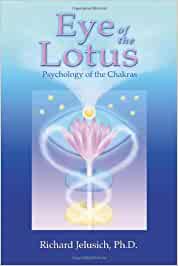
book: Eye of the Lotus

This fundamental shift is at the heart of the pioneering work of Dr. Richard A. Jelusich Integrative Chakra Therapy® (ICT). An approach that moves beyond generic energy healing. ICT presents a revolutionary idea: the seven main chakras are not merely abstract energy centers, but distinct, functional centers of consciousness! Each governing specific aspects of our psychological and emotional being, offering a practical map for self-understanding. The aim is not to add spiritual tasks, but to help you resolve stress and imbalance at their core within your psyche.

The Inner Shift: From Reactivity to Conscious Awareness

Many are initially drawn to Integrative Chakra Therapy® seeking relief from anxiety or chronic stress, and they find it. However, the process is far more profound than simple relaxation. It is a transformative journey from unconscious reactivity to conscious, compassionate awareness.

For example, when your root chakra—the center of safety—holds fear, it can trigger constant anxiety and keep your body in a “fight-or-flight” state. An ICT session brings gentle, conscious attention to this fear, helping release deep wounds and allowing your nervous system to shift from survival to a sense of grounded security.

This initial shift creates the space for profound self-awareness. You might begin to see that your recurring throat chakra issues—such as frequent sore throats or a chronic difficulty in comprehending your truth—are not random occurrences. Instead, they are directly linked to a deeper pattern of stifled self-expression originating in your solar plexus chakra, the seat of your personal power.

What appears on the surface as a physical symptom is, in reality, a poignant conversation between your centers of awareness. Integrative Chakra Therapy® gives you the lexicon to decode this conversation, allowing you to heal the root emotional conflict rather than just repeatedly soothing the surface-level manifestation.

The Modern Medical Bridge: A Partner in Whole-Person Health

ICT’s true strength lies in its alignment with modern healthcare models like Integrative and Functional Medicine, making it a valuable, evidence-informed partner in whole-person care.

In Integrative Medicine, the goal is to blend the best of conventional treatments with validated complementary therapies. Here, Integrative Chakra Therapy® serves as a vital ally to address the profound psychological and emotional toll of illness. For a patient undergoing chemotherapy, work with the solar plexus chakra can be instrumental in restoring a sense of personal power and agency. Similarly, focusing on the heart chakra can help process the grief and fear of a new diagnosis, fostering essential self-compassion.

In Functional Medicine, the focus is laser-sharp: uncover and address the root causes of disease, with chronic stress being a primary culprit. Integrative Chakra Therapy® offers a precise map for this very investigation. A Functional Medicine practitioner might identify that a patient’s elevated cortisol levels and related digestive issues are fueled by deeper, perceived lack of safety and low self-worth. By using chakra work to address these core psychological drivers, ICT helps create a lasting shift in the autonomic nervous system. It becomes a strategic tool for actively rewiring the underlying stress patterns that disrupt hormonal balance, gut health, and immune function.

The Future is Whole-Person Care

We are collectively moving away from an outdated model that treats the physical body in isolation. The future of healing honors the full human experience—body, mind, spirit, and the conscious energy systems that connect them all.

Integrative Chakra Therapy®, as defined by Dr. Jelusich, is perfectly poised for this new era. It provides both a language and a method for exploring the inner dimensions of health. It empowers you to become a conscious architect of your own well-being, not by adding more tasks, but by illuminating the deep connections between your psychological patterns and your physical state. This process restores balance and fosters a deep, trusting connection to your own inner wisdom.

True healing, as ICT reveals, is not a sudden transformation but a gentle unfolding—a remembering of your innate harmony. In this remembering, well-being is no longer a goal to chase but a natural state of being to reclaim.

Blessings Deirdre 

The Art of Deep Listening: The Pathway to True Connection

There are moments in life when what we need most is not advice, solutions, or even words, but the gift of being truly heard. To be listened to with presence and compassion is to feel seen at the deepest level of our being. This is the essence of what Zen Master Thich Nhat Hanh called “deep listening”—a practice that nurtures understanding and, in turn, allows love to flourish.

What Is Deep Listening?

Deep listening is more than hearing words. It is listening with the intent to understand, not to respond or fix. It asks us to put aside our judgments, assumptions, and the urge to offer quick solutions. Instead, it invites us to listen with presence, patience, and compassion.

When we listen deeply, we are not waiting for our turn to speak. We are creating a safe and sacred space where another person feels truly seen and heard. In that space, healing becomes possible.

Deep listening involves being fully present in the moment, giving our undivided attention to the speaker. It means observing not just the words, but also the emotions and body language that accompany them. This level of attentiveness allows us to connect with the speaker on a deeper level, fostering empathy and understanding.

Moreover, deep listening requires us to silence our inner dialogue and resist the temptation to interrupt or interject. It is about embracing silence and allowing the speaker to express themselves fully without fear of judgment or interruption. This practice can lead to profound insights and a stronger sense of connection between individuals.

In essence, deep listening is an act of love and respect. It acknowledges the inherent worth of the speaker and honors their experience. By practicing deep listening, we can build stronger, more meaningful relationships and create a more compassionate and understanding world.

Why Compassion Matters in Listening

Compassion transforms listening from a passive act into an act of love. If someone shares their pain and we meet it with judgment, dismissal, or distraction, the door to trust closes. But when we listen with compassion, we acknowledge their humanity without trying to change it.

For instance, imagine a friend confiding in you about a recent loss. Instead of offering quick solutions or diverting the conversation, you simply listen, nodding and offering words of empathy like, “I’m so sorry you’re going through this.”

This does not mean we agree with everything we hear, nor does it mean we must carry the burden of fixing someone’s problems. Compassionate listening simply allows a person’s truth to exist without interruption or invalidation. That alone can be deeply healing.

The Connection Between Understanding and Love

As Thich Nhat Hanh teaches, love is born from understanding. Without understanding, love can feel shallow or conditional. True love grows when we make the effort to understand the other’s joys, fears, wounds, and dreams.

Think of a child who misbehaves. If a parent only sees the behavior without listening for the pain or unmet need behind it, the response may be anger or punishment. But if the parent listens deeply—with compassion—they may discover loneliness, fear, or a longing for connection. Understanding transforms the way love is expressed.

The same is true in friendships and partnerships. When we listen deeply, we begin to see the whole person before us, not just the surface of their words. That deeper seeing is what sustains love.

How to Practice Deep Listening

Like any meaningful practice, deep listening requires intention and consistency. Here are a few gentle ways to begin:

  • Create space. Put away distractions and give your full attention. Silence your phone, make eye contact, and show with your body language that you are present.
  • Listen without interruption. Allow the other person to speak without rushing in to respond, defend, or advise. Sometimes silence is the most supportive response.
  • Listen Without Judgment: Accept the speaker’s feelings and experiences without evaluating or criticizing them.
  • Listen beneath the words. Pay attention to tone, emotion, and what is left unsaid. Often, the heart of the message lies between the lines. Try to understand the speaker’s perspective and validate their emotions.
  • Reflect back gently – empathize. If appropriate, paraphrase what the speaker has said to ensure understanding and show that you are listening.: “It sounds like you’re feeling…” This shows the speaker that you are engaged and seeking to understand.
  • Hold compassion. Remember that everyone carries unseen struggles. Approach their words with kindness rather than judgment.

Deep Listening as a Form of Healing

In holistic and therapeutic work, deep listening is not just a tool but a foundation. When someone feels deeply heard, they begin to release long-held emotions, opening the door to self-awareness and healing.

This is why deep listening is often called a form of love in action. It requires no special training, only willingness. Yet its impact can be profound: relationships soften, misunderstandings ease, and love has room to grow.

Building Stronger Relationships

Deep listening can also strengthen relationships. When we listen deeply to others, we show them that we care about their thoughts and feelings. This can lead to greater trust and intimacy in relationships. Misunderstandings can be resolved more easily, and conflicts can be navigated with greater empathy and compassion.

A Gentle Invitation to You

Deep listening is not always easy. It asks us to set aside our ego, our need to be right, and even our discomfort with silence. But when practiced with patience and sincerity, it becomes one of the greatest gifts we can offer.

Imagine a world where parents listened deeply to their children, where friends listened without judgment, and where communities listened across differences. In such a world, compassion would flourish, and love would no longer be scarce—it would be the natural language of connection.

As Thich Nhat Hanh reminds us, to listen deeply is to love deeply. And perhaps that is exactly what our world needs most.

So, why not take a moment today to practice deep listening—with yourself. Sit quietly, breathe, and listen to the emotions within you without judgment. By listening inward with compassion, you prepare your heart to listen outward with love.

Blessings Deirdre 

Finding Peace in Chaos

How Hypnotherapy & the Art of Energy Psychology Can Heal Mind, Body & Spirit

Have you found that the world today feels more turbulent than ever? Between political unrest, economic instability, climate crises, social media overwhelm, and personal struggles, it is no wonder so many people are battling chronic stress, anxiety, and mental, emotional exhaustion. The constant barrage of negative news, societal pressures, along with the day-to-day personal challenges of life can leave even the most resilient individuals feeling drained, disconnected, and powerless.

In this blog I plan to share that there is hope and you can tap into personal wellness and healing. Hypnotherapy and Integrative Chakra Therapy® together offer a profound path to healing—not by escaping reality, but by reclaiming inner balance and strength.

Why the World Feels So Chaotic Right Now

We are living in a time of rapid change, and the collective stress is palpable. Here are just a few of the challenges contributing to the overwhelm:
Global Uncertainty – Wars, political divisions, and economic instability create a sense of insecurity about the future.
Digital Overload – Constant notifications, comparison culture, and doomscrolling keep our nervous systems in fight-or-flight mode.
Social Disconnection – Despite being “connected” online, many feel lonelier than ever, lacking deep, meaningful relationships.
Burnout Culture – Hustle mentality and work pressures leave people exhausted, with little time for self-care.

When these external stressors trigger our subconscious fears and past traumas, they can manifest as anxiety, insomnia, chronic pain, or emotional shutdown. That is where hypnotherapy and Integrative Chakra Therapy® come in—helping individuals rewire their subconscious, release stored stress, and restore energetic harmony. Find balance. 

Real-Life Healing: Stories of Transformation 

– Based on actual events, names and some details have been changed to protect privacy. Any resemblance to real persons is unintentional –

  • Sharron – Breaking Free from Anxiety & Overwhelm

Sharron, a corporate professional, came to me feeling constantly on edge. The news cycle, work demands, and family responsibilities left her in a state of chronic anxiety, with panic attacks waking her at night.

Through the process of self discovery in hypnosis, we uncovered a deep-seated belief: “I’m not safe unless I control everything.” This stemmed from childhood instability, and her solar plexus chakra (personal power center) being overstimulated causing it to go into a cycle of self protection and eventually shutting down. 

By helping her subconscious mind to understand the old belief was no longer relevant and using chakra-balancing visualizations, Sarah learned to trust herself and release the need for constant control. Within weeks, her anxiety lessened, and she reported deeper sleep and newfound confidence in handling life’s uncertainties.

  • Mitch – Healing Grief & Heart Chakra Blockages

After losing his father, Mitch felt numb, disconnected, and emotionally stuck. He described it as a “heavy weight” on his chest—a classic sign of a weighted stagnant heart chakra (dealing with deep grief).

In our sessions, hypnotherapy allowed him to safely process his emotions, while chakra work helped release the energetic pain and stagnation in his heart center. He began to reconnect with joy, honor his grief without being consumed by it, and even mend strained family relationships.

  • Lea-Anne – From Burnout to Vitality (Root & Sacral Chakra Healing)

Lea-Anne, a nurse, was exhausted, emotionally drained, and struggling with low motivation. She felt that she could not stand the heaviness of this physical dimension. Her root chakra (the anchor to the physical) and sacral chakra (visceral and creative) were severely depleted from years of over giving, she just wanted to escape. 

Using a blend of hypnotic self examination (to uncover subconscious burnout patterns) and chakra realignment, Lea-Anne learned to set boundaries, prioritize self-care, and reignite her passion for life. She left feeling grounded, energized, and inspired. Proof that true healing must address both mind and energy.

Chakras: Centers of Consciousness & the Subconscious Mind

While often described as “energy vortexes,” chakras are much more than that—they are energetic centers of consciousness, each governing various aspects of our physical, mental, emotional, and spiritual well-being.

As it is my belief that your subconscious mind and soul consciousness are very much connected thus speaking or giving us insights to who we are through your chakras. For example:

  • A stagnant throat chakra may indicate uncomprehended truths “no one understands me for who I truly am,” which may stifle the way one would share their thoughts and or desires.
  • An imbalanced third eye chakra can manifest a sense of confusion or lack of understanding in “what is true is true.”
  • A weakened root chakra “feeling I do not physically exist” often correlates with being able to connect the physical self, like grounding or understanding that you really do have a physical body that needs attention.

In using Hypnotherapy (a therapeutic technique that works directly with the subconscious mind) and Integrative Chakra Therapy® (a holistic approach aimed at balance the body’s energy centers known as chakras), clients can clear the energetic pattern of deep-seated struggles and beliefs. Together, these modalities can co-create a rapid, holistic transformation.

Why This Is not “Woo Woo”—The Science Behind Energy Healing

Skeptics dismiss energy work as “pseudoscience,” but research in psychoneuroimmunology, epigenetics, and biofield science confirms that thoughts, emotions, and energy directly impact our biology.

Studies show that practices like meditation (a form of energy regulation) can change brain structure, reduce inflammation, and improve immune function.

Hypnotherapy has been clinically proven to help with pain management, PTSD, and habit change (endorsed by the American Psychological Association).

Energy psychology techniques (such as Integrative Chakra Therapy®, Reiki, Healing Touch and Emotional Freedom Technique) have been shown to lower cortisol levels and rewire stress responses.

This is not magic—it is mind-body medicine.

My Final Word: You Can Find Peace, Even in Chaos

The outside world may be unpredictable, but your inner world is yours to heal. Whether you are struggling with anxiety, grief, burnout, or simply feeling “off,” hypnotherapy and Integrative Chakra Therapy® can work to help you:

  • Release subconscious blocks keeping you stuck
  • Rebalance your energy for greater vitality
  • Reconnect with your soul’s wisdom to navigate life with clarity and calm


You are not powerless. The tools for transformation already exist within you—sometimes, you just need the right guide to help you access them.

Blessings Deirdre 

Supports for Deep Relaxation and Restful Sleep

How Reiki, Hypnotherapy, and Sound Frequencies Support Relaxation and Sleep

Today we are in constant connection to fast-paced living. Stress and sleepless nights are common. Many people describe lying in bed exhausted, only to have their minds race with thoughts that will not quiet down. Over time, this restless cycle drains both body and spirit. Finding restful supports is essential to breaking this cycle and regaining your well-being.

What we are learning—through both lived experience and emerging neuroscience—is that our mental state does not just influence how we feel, it also shapes how our brains and bodies function at the most basic levels. When we intentionally guide the mind into states of calm, the brain follows, creating space for healing and rest.

This is where the practices of Reiki, hypnotherapy, and therapeutic sound frequencies meet science and ancient wisdom. Together, they offer pathways back to balance, sleep, and peace.

What Science Tells Us

Columbia University’s Research

In 2024, Columbia researchers discovered that our state of mind influences how well our brain cells’ mitochondria—the tiny power plants inside each cell—produce energy. People with less stress and more positive mental states had healthier, more resilient brain function. This means relaxation practices do not just feel good—they may directly support the biology of the brain.

Yale’s Research

At Yale, scientists found that our brains are more resilient than we once believed. Neurons have built-in energy reserves, like backup batteries, which help the brain recover during stress. They also discovered that, with the right support, past trauma does not always make us more reactive. Instead, the brain can learn to quiet old stress patterns and build new, calmer responses.

These findings help explain why approaches that reduce stress—like Reiki, hypnotherapy, and sound therapy—can be so transformative.

The Role of Sound

Sound has long been used for healing. Many people are familiar with binaural beats, which use two tones delivered through headphones to influence brainwaves. While this has shown promise in research, in my practice I take a different approach.

I do not use binaural beats. Instead, I work with therapeutic sound frequencies woven into music. This creates a more natural, immersive experience—no headphones needed. Clients often describe it as being “bathed in sound,” where their thoughts soften and their whole system begins to relax.

Different frequencies can gently encourage the brain toward states of calm or rest, much like changing gears in a car:

  • Delta waves (0.5–4 Hz): deep sleep and physical healing
  • Theta waves (4–8 Hz): relaxation and creativity
  • Alpha waves (8–12 Hz): calm focus and peaceful awareness

When sound supports these rhythms, it becomes easier for the body to let go and for sleep to come naturally.

Reiki and Hypnotherapy

Reiki invites the body into stillness. Clients often describe it as if a “switch flips” inside them—muscles loosen, breathing deepens, and a sense of safety spreads through the body. From a scientific lens, this deep relaxation may support healthier energy production in the brain, echoing Columbia’s research on mitochondria and mental state.

Hypnotherapy works by guiding the mind into a trance-like state, similar to theta brainwaves. In this space, the subconscious becomes more open to letting go of anxious thoughts and rewriting unhelpful patterns. For those who struggle with insomnia fueled by rumination or past experiences, hypnotherapy can gently reshape how the brain responds at bedtime.

When Practices Work Together

Each of these methods—sound, reiki, and hypnotherapy—has its own benefits. But when combined, they create a synergy that reaches mind, body, and spirit at once.

A client, who had lived with insomnia for years after trauma, described the experience this way: “It felt like my brain finally found its off-switch. I slept through the night for the first time in over a decade.”

It was not just one technique that helped—it was the layering of sound to quiet the mind, hypnotherapy to release old patterns, and Reiki to restore balance in the body.

A Gentle Invitation

Science gives us insight into why these practices work, but the real understanding comes through experience.

Imagine lying down in a peaceful space where soft sound surrounds you, Reiki energy soothes the body, and your mind drifts into the relaxed focus of trance. The racing thoughts begin to fade. The body finally exhales. And sleep, instead of feeling like a struggle, feels natural again.

If you have been searching for rest, know that there are pathways forward. You do not have to carry sleepless nights alone—your brain and body have an incredible capacity to relearn calm, given the right support.

Blessings Deirdre 

Cloud Atlas is: Karma & Reincarnation

Cloud Atlas: A Story of Karma, Reincarnation, and the Threads That Bind Us

When you read David Mitchell’s novel Cloud Atlas or watch the visually rich film adaptation, it is easy to feel like you have stepped into a vast tapestry of human experience. Six stories unfold across centuries, from the 1800s to a post-apocalyptic future. On the surface, these tales seem separate, but soon you notice the echoes: a familiar birthmark, a repeated melody, a face that returns in different forms.

What Cloud Atlas is really showing us is something ancient—something spiritual traditions have spoken about for thousands of years: karma and reincarnation.

As the film itself reminds us:

“Our lives are not our own. From womb to tomb, we are bound to others, past and present. And by each crime and every kindness, we birth our future.”

This is not just poetic storytelling. It is a vision of how our choices ripple through time, shaping not only our lives but the lives of others—sometimes in ways we can not yet see.

Karma and Reincarnation—Made Simple

Let us pause for a moment on these two words, because they are often misunderstood.

  • Reincarnation means the soul continues its journey, living through many lifetimes, learning and evolving along the way.
  • Karma means “action.” Every choice we make carries energy that shapes what comes next—for ourselves and for those connected to us.

Put simply: karma is the cause; reincarnation is the journey where those causes bear fruit.

Cloud Atlas takes these profound teachings and translates them into story—making them accessible for a modern audience, whether or not you have studied Eastern philosophy.

The Brilliance of the Nested Narrative

The structural genius of Cloud Atlas lies in how its form mirrors its theme. The story is told as a narrative Russian doll: each tale is interrupted for the next, only to be resolved in reverse order. This creates a perfect, interconnected loop, reflecting the cycle of life, death, and rebirth.

Within this structure, we see six lives, each influencing the next:

  • A lawyer in the 1800s slowly awakens to the horrors of slavery.
  • A young composer in the 1930s pours his soul into a musical masterpiece.
  • A journalist in the 1970s risks everything to uncover corporate corruption.
  • A publisher in modern-day London finds himself humbled in a care home.
  • A genetically engineered clone in a futuristic Korea sparks a revolution.
  • In a distant, post-apocalyptic Hawaii, humanity struggles to begin again.

What ties them all together? The actions of one life ripple into the next. A journal inspires a composer. A piece of music fuels a journalist. A film inspires a revolutionary. Just like in our lives, the seeds we plant often grow in fields we will never personally see.

The Birthmark and the Soul’s Journey

One of the most striking visual clues is the comet-shaped birthmark that appears on different characters across time. It signals the same soul returning again and again in different bodies.

This is underscored by the film’s bold casting choice: the same actors appear in multiple roles, sometimes as villains, sometimes as heroes. This reminds us that the soul is not defined by gender, race, or social status. What carries forward is essence, lessons, and the consequences of our choices.

The Ripples of Karma in Action

Cloud Atlas beautifully shows how even small actions carry immense weight across time.

  • Adam Ewing spares the life of a stowaway—and is later saved by that same man.
  • Robert Frobisher’s Cloud Atlas Sextet continues to inspire long after his death.
  • Sonmi~451’s sacrifice becomes sacred scripture that shapes a future society.

One of the most moving arcs is the soul portrayed by Tom Hanks. In earlier lifetimes, he is greedy, violent, and selfish (Dr. Goose, Hotel Manager). Yet in the far future, as Zachry, he is faced with the same choice between fear and compassion. This time, he chooses courage. By doing so, he breaks a karmic cycle of violence, proving that our past does not have to define our future.

Lessons for Our Own Lives

Most of us can not see our past lives the way characters in Cloud Atlas appear to. But we can live with awareness of these truths:

  • Every Choice Matters. Even small acts of kindness or courage ripple further than we can know.
  • Patterns Can Be Broken. Just because fear or pain has repeated does not mean it must continue. Each moment is a new chance to choose differently.
  • We Are All Connected. Our stories, like the characters in Cloud Atlas, are intertwined in ways we may never fully see. Separation is an illusion.
  • Legacy is Energy, Not Things. What you leave behind—your words, love, and creative energy—may inspire others long after you are gone.

The Eternal Thread

At its heart, Cloud Atlas is a mirror. It shows us that we are threads woven into the same eternal fabric. That every soul, no matter how lost, has the chance to choose differently and change the future.

As Sonmi~451 says: “Death is only a door. When it closes, another opens.”

Perhaps that is the greatest message: we are part of an eternal dance of souls. Every act of love, every moment of courage, and every small kindness carries forward—binding us together across lifetimes, always offering us another chance to heal, to grow, and to remember who we truly are.

What small act of kindness has someone done for you that created a ripple effect in your life?

Blessings Deirdre 

Solitude

Dispelling the Myths Surrounding Solitude and Isolation

Let’s discuss the exploration of intentional solitude, its benefits, and the practical steps individuals can take to incorporate it into their lives for holistic well-being.

Intentional solitude is a deliberate choice to step away from the constant noise and demands of the external world. It is not an escape but rather a conscious effort to create a sacred space for self-reflection, personal growth, and the rediscovery of one’s inner self. In this era marked by incessant connectivity, intentional solitude becomes a valuable tool to navigate the complexities of daily life.

To fully appreciate the significance of intentional solitude, it’s crucial to recognize its distinction from isolation. While isolation implies being cut off from others due to external circumstances or internal struggles, intentional solitude is an initiative-taking decision to embrace aloneness as a transformative journey. It is about turning inward to listen to one’s own needs, aspirations, and fears without the interference of external influences.

Incorporating intentional solitude into one’s life involves a variety of practices that cater to the holistic well-being of the mind, body, and spirit. Mindfulness practices, such as yoga and meditation, offer effective ways to cultivate inner peace and awareness. These practices enable individuals to be present in the moment, fostering a deeper connection with themselves and their surroundings.

Engaging with nature is another powerful aspect of intentional solitude. Activities like hiking and swimming provide opportunities to immerse oneself in the natural world, promoting a sense of unity with the environment. Nature has a profound ability to heal and rejuvenate, making it a vital component of intentional solitude.

Your use of Reiki, Integrative Chakra Therapy, and Hypnotherapy as intentional practices further exemplifies the diverse approaches one can take on this transformative journey. These holistic therapies offer not only relaxation but also serve as tools for self-empowerment, helping individuals break free from the noise of external influences and reconnect with their inner selves.

By recognizing the signs of true isolation versus solitude, individuals can make informed choices that align with their well-being. Actively choosing connection, whether through social interactions, meaningful relationships, or engaging in activities that bring joy, adds another layer to the intentional solitude narrative. This integrated approach fosters a balance between solitude and connection, empowering individuals to navigate life’s challenges with resilience and self-awareness.

In the end, intentional solitude is a profound and purposeful journey inward, offering transformative benefits for mental, emotional, and spiritual well-being. Through mindfulness practices, nature engagement, and holistic therapies, individuals can embark on a holistic journey, breaking free from the chains of isolation and forging a path toward meaningful connections and profound self-awareness.

Blessings: Deirdre

Confronting Fear with Compassion

Navigating our Shadows: Confronting Fear with Compassion

Confronting Fear with Compassion

The recent weeks have brought a variety of interesting moments, as I was navigating my shadows and confronting my fear with compassion. I found myself in corner of deep introspection and self-discovery. Recently I took a significant step, tendering my resignation from a role I’ve held for nearly 14 years. My decision required a substantial reservoir of courage and compassion, as it meant navigating Fear and the idea of potentially letting someone down. I found myself in an internal dialogue, of what if’s, why’s, and how-tos. Meditation and conversations with my emotions did assist me, and I began to see with clarity a path or journey forward.

During this period, I stumbled upon an authentic compassionate message articulated by Pema Chödrön, which resonated deeply with my journey. Her wisdom encapsulated in this excerpt from “When Things Fall Apart: Heart Advice for Difficult Times” became a guiding light in understanding and confronting my fear. She writes: “Then the young warrior said, “How can I defeat you?” Fear replied, “My weapons are that I talk fast, and I get very close to your face. Then you get completely unnerved, and you do whatever I say. If you don’t do what I tell you, I have no power. You can listen to me, and you can have respect for me. You can even be convinced by me. But if you don’t do what I say, I have no power.” In that way, the student warrior learned how to defeat fear.”

My eyes opened by this insightful dialogue; as fear became a transformative force, illustrating that fear’s power lies in our response to it. By acknowledging its tactics and choosing not to succumb to its demands, one can emerge victorious over fear. This revelation helped to fortify my conviction in the path I chose, reminding me that empowerment arises from understanding and transcending our fears.

We all have those quiet corners of our lives, where the mind whispers of uncertainty. And we often find ourselves face-to-face with fear in those corners with our greatest fears. And did I mention that fear is a formidable adversary, capable of dismantling any of the sandcastle fortresses, of security, we painstakingly build? I felt comfort in the profound work of Pema Chödrön, in “When Things Fall Apart: Heart Advice for Difficult Times,” as it paints a poignant picture of fear as an entity with the power to talk fast and draw in uncomfortably close, leaving us unnerved, overwhelmed and susceptible to its influence.

When we can visualize or imagine this young warrior seeking ‘the’ answer to defeating fear: we can enter into the intimate conversation with fear itself, and the revelation unfolds. Fear, you see, discloses its weapons—words that race and an invasive proximity. Fear thrives on our compliance, gaining strength when we succumb to its demands. However, in a powerful twist, fear unveils its vulnerability. Its potency lies solely in our obedience; without it, fear withers away.

Pema Chödrön imparts a profound lesson through the student warrior’s journey: to overcome fear, one must listen without yielding, respect without submission, and be convinced without surrender. It’s a dance of empowerment, a delicate balance between acknowledging fear’s presence and refusing to let it dictate our actions.

The essence of this wisdom lies in enjoying life fully, much like building that sandcastle fortress on the shore. Embrace the joy without clinging to it desperately, for the tide of change is inevitable. And all things wash away. So, as we navigate the ebb and flow of life, the key is to recognize fear, stare into its eyes with unwavering determination, and steadfastly choose our own path.

Confronting fear is not about eradicating it entirely; rather, it’s about understanding its nature and disarming it through our resilience and self-empowerment. By embracing the impermanence of our sandcastles, we learn to dance with the uncertainties, finding strength in vulnerability, and transforming fear into our guide rather than our dictator.

And so, I found that quiet corner of introspection, and had that conversation with the shadows of my fears, and I let compassion be my companion. For it was in that gentle embrace of self-compassion and understanding that my fortress of fear began to crumble.

I was able to learn the art of defeating fear, not with force, but with the profound wisdom that arises when we face the shadows with an open heart and an unwavering spirit.

Blessings Deirdre