
Supports for Deep Relaxation and Restful Sleep

How Reiki, Hypnotherapy, and Sound Frequencies Support Relaxation and Sleep

Today we are in constant connection to fast-paced living. Stress and sleepless nights are common. Many people describe lying in bed exhausted, only to have their minds race with thoughts that will not quiet down. Over time, this restless cycle drains both body and spirit. Finding restful supports is essential to breaking this cycle and regaining your well-being.

What we are learning—through both lived experience and emerging neuroscience—is that our mental state does not just influence how we feel, it also shapes how our brains and bodies function at the most basic levels. When we intentionally guide the mind into states of calm, the brain follows, creating space for healing and rest.

This is where the practices of Reiki, hypnotherapy, and therapeutic sound frequencies meet science and ancient wisdom. Together, they offer pathways back to balance, sleep, and peace.

What Science Tells Us

Columbia University’s Research

In 2024, Columbia researchers discovered that our state of mind influences how well our brain cells’ mitochondria—the tiny power plants inside each cell—produce energy. People with less stress and more positive mental states had healthier, more resilient brain function. This means relaxation practices do not just feel good—they may directly support the biology of the brain.

Yale’s Research

At Yale, scientists found that our brains are more resilient than we once believed. Neurons have built-in energy reserves, like backup batteries, which help the brain recover during stress. They also discovered that, with the right support, past trauma does not always make us more reactive. Instead, the brain can learn to quiet old stress patterns and build new, calmer responses.

These findings help explain why approaches that reduce stress—like Reiki, hypnotherapy, and sound therapy—can be so transformative.

The Role of Sound

Sound has long been used for healing. Many people are familiar with binaural beats, which use two tones delivered through headphones to influence brainwaves. While this has shown promise in research, in my practice I take a different approach.

I do not use binaural beats. Instead, I work with therapeutic sound frequencies woven into music. This creates a more natural, immersive experience—no headphones needed. Clients often describe it as being “bathed in sound,” where their thoughts soften and their whole system begins to relax.

Different frequencies can gently encourage the brain toward states of calm or rest, much like changing gears in a car:

  • Delta waves (0.5–4 Hz): deep sleep and physical healing
  • Theta waves (4–8 Hz): relaxation and creativity
  • Alpha waves (8–12 Hz): calm focus and peaceful awareness

When sound supports these rhythms, it becomes easier for the body to let go and for sleep to come naturally.

Reiki and Hypnotherapy

Reiki invites the body into stillness. Clients often describe it as if a “switch flips” inside them—muscles loosen, breathing deepens, and a sense of safety spreads through the body. From a scientific lens, this deep relaxation may support healthier energy production in the brain, echoing Columbia’s research on mitochondria and mental state.

Hypnotherapy works by guiding the mind into a trance-like state, similar to theta brainwaves. In this space, the subconscious becomes more open to letting go of anxious thoughts and rewriting unhelpful patterns. For those who struggle with insomnia fueled by rumination or past experiences, hypnotherapy can gently reshape how the brain responds at bedtime.

When Practices Work Together

Each of these methods—sound, reiki, and hypnotherapy—has its own benefits. But when combined, they create a synergy that reaches mind, body, and spirit at once.

A client, who had lived with insomnia for years after trauma, described the experience this way: “It felt like my brain finally found its off-switch. I slept through the night for the first time in over a decade.”

It was not just one technique that helped—it was the layering of sound to quiet the mind, hypnotherapy to release old patterns, and Reiki to restore balance in the body.

A Gentle Invitation

Science gives us insight into why these practices work, but the real understanding comes through experience.

Imagine lying down in a peaceful space where soft sound surrounds you, Reiki energy soothes the body, and your mind drifts into the relaxed focus of trance. The racing thoughts begin to fade. The body finally exhales. And sleep, instead of feeling like a struggle, feels natural again.

If you have been searching for rest, know that there are pathways forward. You do not have to carry sleepless nights alone—your brain and body have an incredible capacity to relearn calm, given the right support.

Blessings Deirdre 

Cloud Atlas is: Karma & Reincarnation

Cloud Atlas: A Story of Karma, Reincarnation, and the Threads That Bind Us

When you read David Mitchell’s novel Cloud Atlas or watch the visually rich film adaptation, it is easy to feel like you have stepped into a vast tapestry of human experience. Six stories unfold across centuries, from the 1800s to a post-apocalyptic future. On the surface, these tales seem separate, but soon you notice the echoes: a familiar birthmark, a repeated melody, a face that returns in different forms.

What Cloud Atlas is really showing us is something ancient—something spiritual traditions have spoken about for thousands of years: karma and reincarnation.

As the film itself reminds us:

“Our lives are not our own. From womb to tomb, we are bound to others, past and present. And by each crime and every kindness, we birth our future.”

This is not just poetic storytelling. It is a vision of how our choices ripple through time, shaping not only our lives but the lives of others—sometimes in ways we can not yet see.

Karma and Reincarnation—Made Simple

Let us pause for a moment on these two words, because they are often misunderstood.

  • Reincarnation means the soul continues its journey, living through many lifetimes, learning and evolving along the way.
  • Karma means “action.” Every choice we make carries energy that shapes what comes next—for ourselves and for those connected to us.

Put simply: karma is the cause; reincarnation is the journey where those causes bear fruit.

Cloud Atlas takes these profound teachings and translates them into story—making them accessible for a modern audience, whether or not you have studied Eastern philosophy.

The Brilliance of the Nested Narrative

The structural genius of Cloud Atlas lies in how its form mirrors its theme. The story is told as a narrative Russian doll: each tale is interrupted for the next, only to be resolved in reverse order. This creates a perfect, interconnected loop, reflecting the cycle of life, death, and rebirth.

Within this structure, we see six lives, each influencing the next:

  • A lawyer in the 1800s slowly awakens to the horrors of slavery.
  • A young composer in the 1930s pours his soul into a musical masterpiece.
  • A journalist in the 1970s risks everything to uncover corporate corruption.
  • A publisher in modern-day London finds himself humbled in a care home.
  • A genetically engineered clone in a futuristic Korea sparks a revolution.
  • In a distant, post-apocalyptic Hawaii, humanity struggles to begin again.

What ties them all together? The actions of one life ripple into the next. A journal inspires a composer. A piece of music fuels a journalist. A film inspires a revolutionary. Just like in our lives, the seeds we plant often grow in fields we will never personally see.

The Birthmark and the Soul’s Journey

One of the most striking visual clues is the comet-shaped birthmark that appears on different characters across time. It signals the same soul returning again and again in different bodies.

This is underscored by the film’s bold casting choice: the same actors appear in multiple roles, sometimes as villains, sometimes as heroes. This reminds us that the soul is not defined by gender, race, or social status. What carries forward is essence, lessons, and the consequences of our choices.

The Ripples of Karma in Action

Cloud Atlas beautifully shows how even small actions carry immense weight across time.

  • Adam Ewing spares the life of a stowaway—and is later saved by that same man.
  • Robert Frobisher’s Cloud Atlas Sextet continues to inspire long after his death.
  • Sonmi~451’s sacrifice becomes sacred scripture that shapes a future society.

One of the most moving arcs is the soul portrayed by Tom Hanks. In earlier lifetimes, he is greedy, violent, and selfish (Dr. Goose, Hotel Manager). Yet in the far future, as Zachry, he is faced with the same choice between fear and compassion. This time, he chooses courage. By doing so, he breaks a karmic cycle of violence, proving that our past does not have to define our future.

Lessons for Our Own Lives

Most of us can not see our past lives the way characters in Cloud Atlas appear to. But we can live with awareness of these truths:

  • Every Choice Matters. Even small acts of kindness or courage ripple further than we can know.
  • Patterns Can Be Broken. Just because fear or pain has repeated does not mean it must continue. Each moment is a new chance to choose differently.
  • We Are All Connected. Our stories, like the characters in Cloud Atlas, are intertwined in ways we may never fully see. Separation is an illusion.
  • Legacy is Energy, Not Things. What you leave behind—your words, love, and creative energy—may inspire others long after you are gone.

The Eternal Thread

At its heart, Cloud Atlas is a mirror. It shows us that we are threads woven into the same eternal fabric. That every soul, no matter how lost, has the chance to choose differently and change the future.

As Sonmi~451 says: “Death is only a door. When it closes, another opens.”

Perhaps that is the greatest message: we are part of an eternal dance of souls. Every act of love, every moment of courage, and every small kindness carries forward—binding us together across lifetimes, always offering us another chance to heal, to grow, and to remember who we truly are.

What small act of kindness has someone done for you that created a ripple effect in your life?

Blessings Deirdre 

Enhancing Spiritual Connection

Enhancing Your Spiritual Connection Through Hypnotherapy

As we journey toward self-empowerment and healing, spirituality often plays a crucial role. Unlike religion, which can be structured and prescriptive, spirituality is a deeply personal experience that transcends specific doctrines or beliefs. It recognizes our inherent connection to a greater source—whether you call it God, the Universe, or simply the Source of All. Hypnotherapy is a powerful tool that can enhance this spiritual connection, helping us tap into the oneness that spirituality promises.

Understanding Spirituality

Spirituality is about recognizing that we are all connected to a greater source. It’s about experiencing love, freedom, and a profound sense of unity with everything around us. It encourages us to see ourselves as both the entire ocean and a single drop within it, embracing the vastness of our existence and the individuality of our journey.

While religions often involve external teachings and rituals, which are deeply valuable and meaningful to many, spirituality offers a personal journey that complements these practices. Spirituality is about your own experiences and how you connect with the divine within you, without diminishing any religious practice or beliefs. It’s an individual exploration that can coexist with religious devotion, enhancing the personal aspects of your faith. This personal journey towards oneness and inner peace is where hypnotherapy can be particularly effective. Hypnotherapy supports this inward exploration, helping you deepen your connection to the divine, whether that is within the framework of a particular religion or your own unique spiritual path.

Hypnotherapy: As a Gateway to Spiritual Connection

Hypnotherapy is a therapeutic technique that uses guided relaxation and focused attention to achieve a heightened state of awareness, often referred to as a trance. In this state, the mind is more open to positive suggestions and profound insights. Here’s how hypnotherapy can enhance your spiritual connection:

  1. Accessing the Subconscious Mind: Hypnotherapy helps you tap into your subconscious mind, where deep-seated beliefs and emotions reside. By accessing this part of your mind, you can uncover and release blocks that hinder your spiritual growth.
  2. Promoting Inner Peace: Through guided sessions, hypnotherapy encourages deep relaxation and stress relief. This state of calmness fosters a sense of inner peace, making it easier to connect with your spiritual self.
  3. Enhancing Self-Awareness: Hypnotherapy sessions often involve self-exploration and introspection. This heightened self-awareness helps you understand your true nature and your connection to the divine, reinforcing the belief that the connection is within you.
  4. Facilitating Personal Experiences: Because spirituality is based on personal experiences, hypnotherapy can help you explore and deepen these experiences. Whether it’s through visualization, past life regression, or other techniques, hypnotherapy allows you to have profound spiritual insights that are uniquely yours.

Unity in Diversity

One of the most beautiful aspects of spirituality is its inclusiveness. It unites people regardless of their religious beliefs or backgrounds. Hypnotherapy, by enhancing your spiritual connection, reinforces this sense of unity. It teaches that the divine spark is within each of us, encouraging a sense of oneness and harmony with others.

This universal connection helps us create our own version of Heaven on Earth. By fostering love, understanding, and compassion, spirituality and hypnotherapy together promote a world where we recognize and celebrate our shared humanity.

Spirituality Through Hypnotherapy: Creating Heaven on Earth

Creating Heaven on Earth starts with inner transformation. Hypnotherapy aids in this transformation by helping you align with your higher self and the divine source. When you heal old emotional wounds and release limiting beliefs, you open up to love and freedom—the core tenets of spirituality.

As you grow spiritually through hypnotherapy, you begin to radiate this love and freedom outward, impacting those around you. Your personal journey becomes a beacon for others, showing that true spiritual connection comes from within and is accessible to everyone.

Embracing Your Spiritual Journey

Your spiritual journey is uniquely yours. It’s not about following someone else’s path but about discovering and nurturing your own connection to the divine. Hypnotherapy is a supportive tool in this journey, helping you delve deeper into your subconscious, release what no longer serves you, and embrace the love and freedom that spirituality offers.

Hypnotherapy for Pain, Illness, and Trauma

For those suffering from pain, illness, or trauma, hypnotherapy can be particularly transformative. When dealing with such challenges, it’s easy to feel disconnected from the world and from oneself. Hypnotherapy can help bridge this gap, offering the following benefits:

  1. Pain Management: Hypnotherapy has been shown to be effective in managing chronic pain. By altering the perception of pain and promoting relaxation, it can reduce the intensity of pain and improve quality of life.
  2. Emotional Healing: Those who have experienced trauma often carry emotional scars that affect their daily lives. Hypnotherapy can help process and release these traumatic memories, providing emotional relief and fostering a sense of safety and peace.
  3. Coping with Illness: For individuals dealing with illness, hypnotherapy can enhance the body’s natural healing processes by reducing stress, improving immune function, and promoting a positive outlook. This holistic approach can complement medical treatments and improve overall well-being.
  4. Spiritual Resilience: Pain, illness, and trauma can test one’s spiritual beliefs and sense of purpose. Hypnotherapy helps reinforce spiritual connections, providing strength and resilience during difficult times. By connecting to the divine within, individuals find the courage and inspiration to navigate their challenges.

Conclusion

Spirituality and hypnotherapy together form a powerful combination for enhancing your connection to the divine. By promoting self-awareness, inner peace, and personal experiences, hypnotherapy helps you tap into the oneness that spirituality promises. It’s a journey that unites us all, regardless of our beliefs, and teaches us to create heaven on Earth through love and freedom. For those suffering from pain, illness, or trauma, hypnotherapy offers additional support, fostering healing and resilience. Embrace this journey, and discover the profound spiritual connection within you.

This blog article is written by Rev. Deirdre Leighton RCHt who practices Spiritual Hypnotherapy helping individuals connect deeply to heal themselves. All comments are of her personal view of the deep connection Spirituality and Hypnotherapy hold. 

Blessings Deirdre 

Understanding Judgment and Discernment

Recently, I engaged in a conversation with fellow spiritual healers about the understanding of judgment and discernment. It was evident that these two words are often entangled, leading to confusion about their true meanings and implications. While both involve making evaluations or assessments, they invariably operate from different mindsets and intentions. Thus, it is important to understand the distinction between judgment and discernment to foster healthy relationships, promote understanding, and enhance personal growth.

N

Nature of Judgment

Judgment typically involves forming opinions or conclusions about situations, events, and people. A dictionary will tell you judgment is based on personal biases, preconceptions, and/or limited information. It often arises from a place of ego, fear, or insecurity, where individuals project their own beliefs, values, and expectations onto others without genuine understanding or empathy.

In essence, judgment tends to be rigid, categorical, and even closed-minded. It can lead to division, prejudice, and often conflict. This can consciously and often unconsciously set up barriers that hinder authentic connection and compassion. When we judge, we impose our subjective viewpoints onto reality, disregarding the complexity and diversity of human experiences.

Discernment is an Art

When we look at discernment, we are using skills that involve perceiving, analyzing, and understanding with clarity and wisdom. Unlike the nature of judgment, discernment is an art that operates from a place of openness, curiosity, and humility, allowing individuals to navigate through complexities and nuances without jumping to hasty conclusions.

To practice discernment, one is required to focus on mindfulness and self-awareness. This focus enables individuals to differentiate between facts and interpretations. Individuals become aware of ways to discern patterns and underlying motivations and recognize the broader context in which events unfold. Discernment encourages critical thinking and emotional intelligence, fostering deeper insights and meaningful connections with others.

How can we distinguish whether we are engaging in judgment or exercising discernment?

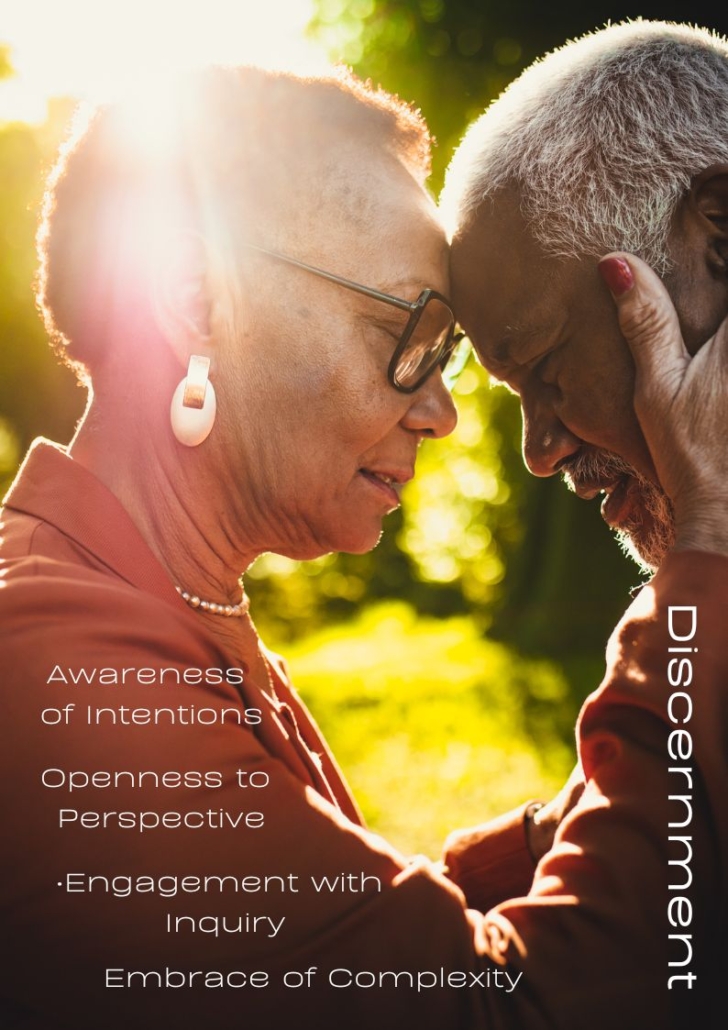
  • Awareness of Intentions: Judgment more often than not stems from a place of ego or insecurity. In judgment, we seek to validate one’s beliefs or assert dominance over others. In contrast, discernment arises from a place of humility and empathy, aiming to understand and navigate complexities with clarity and compassion.
  • Openness to Perspective: Judgment tends to be narrow-minded and dismissive of alternative viewpoints, while discernment embraces diversity and seeks to explore multiple perspectives without prejudice or bias.
  • Engagement with Inquiry: Judgment relies on assumptions and stereotypes, whereas discernment involves asking questions, seeking understanding, and being open to new information and insights.
  • Embrace of Complexity: Judgment oversimplifies and categorizes, whereas discernment acknowledges the multifaceted nature of reality, embracing ambiguity and paradoxes with humility and curiosity.

How can we cultivate discernment in everyday life?

  • Cultivate discernment in our interactions and decision-making processes with a practice of mindfulness and self-reflection. Learn to become aware of our thoughts, emotions, and biases recognizing we all are a work in progress.
  • Cultivate empathy and compassion by seeking to understand one another’s perspectives and experiences. Be the observer listening without judgment.
  • Look for ways to engage in critical thinking and inquiry, questioning assumptions and examining evidence before forming opinions.
  • Embrace uncertainty and complexity, recognizing that truth is often multifaceted and context dependent.

My final thoughts are while judgment and discernment both involve evaluation and assessment, they operate from fundamentally different mindsets and intentions. By cultivating discernment over judgment, we can foster deeper understanding, promote empathy and inclusivity, and navigate through life’s complexities with clarity and wisdom.

Choosing discernment over judgment allows us to support a deeper understanding of ourselves and of others, fostering empathy, inclusivity, and clarity in navigating life’s complexities. Discernment then becomes a guiding principle in both our personal and professional lives, shaping a culture of compassion, curiosity, and mutual respect within our communities.

In nurturing a culture of discernment, we create spaces where individuals feel valued, understood, and empowered to engage in meaningful dialogue and collaboration. This shift from judgment to discernment opens us to the richness and diversity of the human experience, facilitating deeper connections and collective spiritual growth.

Just for today, let us embark on this journey of discernment together, embracing life’s uncertainties with humility, curiosity, and compassion as our compass. Through this intentional choice, we pave the way for profound personal and professional transformation, fostering a world of understanding and connection.

Blessings Deirdre 

Solitude

Dispelling the Myths Surrounding Solitude and Isolation

Let’s discuss the exploration of intentional solitude, its benefits, and the practical steps individuals can take to incorporate it into their lives for holistic well-being.

Intentional solitude is a deliberate choice to step away from the constant noise and demands of the external world. It is not an escape but rather a conscious effort to create a sacred space for self-reflection, personal growth, and the rediscovery of one’s inner self. In this era marked by incessant connectivity, intentional solitude becomes a valuable tool to navigate the complexities of daily life.

To fully appreciate the significance of intentional solitude, it’s crucial to recognize its distinction from isolation. While isolation implies being cut off from others due to external circumstances or internal struggles, intentional solitude is an initiative-taking decision to embrace aloneness as a transformative journey. It is about turning inward to listen to one’s own needs, aspirations, and fears without the interference of external influences.

Incorporating intentional solitude into one’s life involves a variety of practices that cater to the holistic well-being of the mind, body, and spirit. Mindfulness practices, such as yoga and meditation, offer effective ways to cultivate inner peace and awareness. These practices enable individuals to be present in the moment, fostering a deeper connection with themselves and their surroundings.

Engaging with nature is another powerful aspect of intentional solitude. Activities like hiking and swimming provide opportunities to immerse oneself in the natural world, promoting a sense of unity with the environment. Nature has a profound ability to heal and rejuvenate, making it a vital component of intentional solitude.

Your use of Reiki, Integrative Chakra Therapy, and Hypnotherapy as intentional practices further exemplifies the diverse approaches one can take on this transformative journey. These holistic therapies offer not only relaxation but also serve as tools for self-empowerment, helping individuals break free from the noise of external influences and reconnect with their inner selves.

By recognizing the signs of true isolation versus solitude, individuals can make informed choices that align with their well-being. Actively choosing connection, whether through social interactions, meaningful relationships, or engaging in activities that bring joy, adds another layer to the intentional solitude narrative. This integrated approach fosters a balance between solitude and connection, empowering individuals to navigate life’s challenges with resilience and self-awareness.

In the end, intentional solitude is a profound and purposeful journey inward, offering transformative benefits for mental, emotional, and spiritual well-being. Through mindfulness practices, nature engagement, and holistic therapies, individuals can embark on a holistic journey, breaking free from the chains of isolation and forging a path toward meaningful connections and profound self-awareness.

Blessings: Deirdre

Book Review: Rewire Your Anxious Brain

Unraveling Anxiety: An Integrated Journey

This book review was written for the Canadian Association of Counseling Hypnotherapists and Educators as part of on going continuing education and personal development. You can find the original article here: CACHE Resources

Note: For this book review, I looked to the authors’ concepts on how the anxious brain works and how I may seamlessly intertwine them with hypnotherapy.

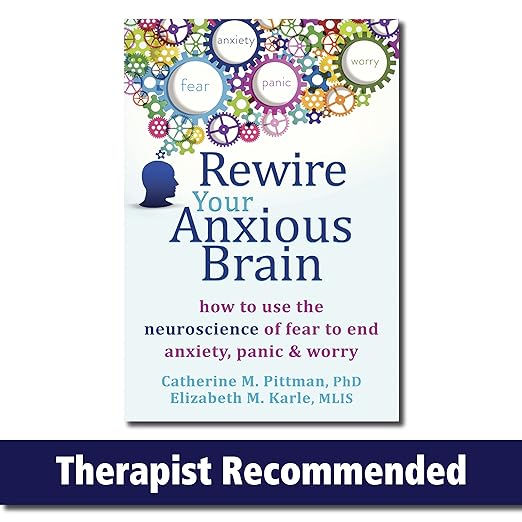
Today I explore the transformative insights from Catherine M. Pittman and Elizabeth M. Karle’s book, ‘Rewire Your Anxious Brain’. An inviting book that guides readers on an integrative exploration of managing anxiety. Written from a neuroscience view point it dives in the reasoning and processes one can experience and learn to reduce fear and end anxiety. This book was delightfully an easy read – not full of unexplained scientific terminology but rather a normalized language, with easy-to-follow exercises and explanations.

In my journey, I dove with the authors into the intricate workings of the brain’s fear response, as they unraveled the mysteries of the amygdala. They detailed the role of how the amygdala1 works – its role in anxiety. From this journey I have concluded “Rewire Your Anxious Brain” can serve as a compass, used in navigating the intersection of cognitive-behavioral techniques and the practice of client centered hypnotherapy and here is why.

When speaking to the working of hypnotherapy, I speak of the connection between the conscious mind and the subconscious mind. How it serves as a therapeutic modality allowing the client or individual to change and or modify (personally) their goals through suggestion and metaphor. This is akin to the insights presented in “Rewire Your Anxious Brain”. Where individuals embark on a personal transformative journey of the mind and how information is passed and stored. Including how life experiences play a role in our perceptions and how the Amygdala’s reactions are not logical. Very similar to what we experience and understand about the subconscious mind in hypnotherapy.

Hypnotherapy becomes a complimentary therapeutic modality, as it can seamlessly intertwine the books’ concepts and breathing exercises, guides individuals into a relaxed state. Ultimately to the place where the subconscious mind becomes more amenable to positive suggestions. I believe the practice of hypnotic process is in alignment with the book’s emphasis on reshaping the thought patterns thus addressing the key factors of anxiety.

My spiritual perspective of Hypnotherapy is that of hypnosis being a conduit to the subconscious. And this conduit can become a canvas of, visualization, imagery, and story (metaphor). This perception is very similar to the book’s principal techniques of breath work, diagramming triggers (like parts therapy) are artfully applied. The book emphasizes the role of neuroplasticity, the brain’s ability to reorganize itself, and how one can leverage this phenomenon to rewire anxious responses. The role of a trained hypnotherapist is very similar as we work to assist the client to find their trigger (or goal) and to explore ways to transform it.

The book’s insights into the plasticity of the brain, gives us a scientific foundation for understanding how
hypnotherapy can influence and reshape ingrained anxious tendencies at a neural level. For instance, the
authors discuss the importance of repeated, focused attention to create lasting changes in the brain. This mirrors the repetitive and focused nature of setting an anchor or using metaphor, visualization and suggestion used in hypnotherapy sessions. By aligning and intertwining these practices, individuals engaging in both approaches may experience a collaborative effect, reinforcing positive changes initiated through hypnotherapy, with the scientifically supported strategies outlined in the book. Picture this as a collaborative dance between science, hypnotherapy, and the subconscious, orchestrated to break free from the shackles of anxiety.

As I journeyed deeper, the practical exercises and mindfulness techniques laid out by the authors have become welcoming tools to enhance my practice. For example: The use of muscle tension inventory or exploring an exercise of tension vs relaxation can be written into knowledgeable scripts or used as components of parts therapy, guided imagery, or visualization techniques such as the split screen approach. Put into practice those guided through a hypnosis session can reshape their inner narrative, navigating the labyrinth of anxiety with newfound clarity and resilience. Since reading “Rewire Your Anxious Brain” I have witnessed many benefits of this book’s insights.
Enhancing my clients’ understanding of the processes of the conscious and subconscious mind.

  1. Facilitating the integration of the scientific concepts from “Rewire Your Anxious Brain” allows the
    client to better understand how and why they experience what they experience.
  2. Has allowed me to embrace a more comprehensive and empowering approach to anxiety
    management within the framework of integrative healing.
  3. This intertwining or fusion of practices aligns seamlessly with my mission, of promoting self-awareness
    and self-empowerment.
  4. It has allowed me to paint a canvas where mental well-being isn’t just a destination but a
    transformative journey through the realms of consciousness.

To conclude – the central idea of this book revolves around the concept of neuroplasticity, the brain’s ability to reorganize itself by forming new neural connections. Author’s Pittman and Karle explain how anxiety is rooted in the brain’s wiring and offer insights into understanding the biological and psychological factors contributing to anxious thoughts and behaviors.

A key takeaway is the importance of mindfulness, self-awareness, self-care and how it can be employed to reshape neural pathways associated with anxiety. The authors provide many easy-to-follow techniques, including cognitive-behavioral strategies, to interrupt anxious thought patterns and replace them with healthier alternatives. Offering a blend of scientific insights and practical exercises, the book empowers readers, clients, and therapists to take an active role in the process of rewiring anxious brains.

This book has been a great addition to my practices’ approach, to self-empowerment. I can see how integrating the principles from “Rewire Your Anxious Brain” complements my existing practices, allowing me to provide individuals with valuable tools to address the mental health aspect of their overall wellbeing.


Rewire Your Anxious Brain – Catherine M. Pittman, PhD., Elizabeth M. Karle, MLIS
New Harbinger Publications – ISBN: 978-1-62625-113-7

1 Amygdala – https://study.com/academy/lesson/the-amygdala-definition-role-function.html

Blessings: Deirdre

Shadows of Self-doubt, Unworthiness: Garnet’s Journey to Mental Wellness

When you start to embark on the complex journey to mental well-being, you may feel like you are navigating a labyrinth of emotions—fear, anxiety, stress, and past traumas that metaphorically are casting shadows of self-doubt, unworthiness, lack of purpose on the path.

The journey becomes a delicate dance of moving forward through healing. In my day-to-day practice I have found that hypnotherapy emerges as a gentle guide, a path to orchestrating a transformative symphony of self-discovery. Let me share my insights as we “dance” through the eyes of Garnet —a real-life example where hypnotherapy became the key to unlocking the gates of empowerment. As we explore her journey, metaphors will serve as poignant symbols, highlighting the profound messages carried in the therapeutic dance. (Note: Garnet is a fictitious name used to conceal personal information and identity.)

Garnet’s Journey: From Shadows to Light

Garnet’s story begins in the shadows of paralyzing anxiety, a consequence of a traumatic incident that lingered for years in the recesses of her mind. Garnet has sought out traditional therapy which provided some relief, but she was still left with this feeling of anxiety when certain circumstances or situations arose. At times it was so paralyzing she was unable to get out of bed. I first worked with Garnet in a Reiki session to introduce the calming effects it can bring forth. We then had a deep conversation around the conscious mind and the subconscious mind and how we store beliefs, traumas, and old patterns. It was this discussion that guided her decision to try hypnotherapy. Her words were “this process allowed me to see how to over come the paralyzing anxiety and empowed myself to see things differently.”

The Sculptor’s Touch

In using the power of metaphor Garnet was able to draw inspiration from the story of a sculptor shaping clay in the therapeutic process described in “Clay Work and Body Image in Art Therapy: Using Metaphor and Symbolism to Heal”  (Crocker, Trisha & Carr, Susan. 2021). We worked together to bring forth her creative consciousness which became the skilled sculptor of her subconscious. Through the visualization of touch both delicate and compassionate, each session was a chance for Garnet to reshape the narrative of her experiences. In this way the sculptor’s (Garnet’s) touch served as a metaphor for her to remodel the paralyzing perception of herself and her past.

The Symphony of Self-Discovery

Much like one could call a “therapeutic symphony” Garnet was now able to start a new journey which unfolded as a mesmerizing composition of self-discovery. Another metaphor that draws inspiration from the symphony presented in the “Metaphors of the Orchestra–The Orchestra as a Metaphor.” (Spitzer, J. 1996). This article helped to underscore each note played by the therapist, every guided meditation, and relaxation technique became a chord in the symphony that resonated within her. She was able to use these transformative melodies orchestrated by hypnotherapy to harmonize with Garnet’s inner rhythm. A process that was now able to unlock the doors of strength and resilience she had never been able to explore. This symphony of self-discovery metaphorically portrayed her therapeutic journey as an orchestration of self-empowerment.

The Garden of Empowerment

Garnet continued her therapeutic dance, as the metaphorical garden of self-empowerment bloomed within her subconscious. Inspired by the metaphor of a garden in the “Sensory Stimulation & Metaphors in the Garden” (Daniela Silva-Rodriguez Bonazzi. 2019), where the therapist cultivated an environment in which the blossoms of self-empowerment could flourish. The importance of trust, faith and self-confidence were delicate shoots and needed to be tended to with care: water, sun, fertilization or self-compassion, love and understanding. Using the garden of self-empowerment metaphor encapsulates a transformative process, where the seeds of resilience were sown, and Garnet found herself standing amidst a garden of the most vibrant hues of newfound strength and wisdom.

A Symphony of Empowerment

In sharing Garnet’s story to self-empowerment and awareness, it becomes evident that empowerment is the crescendo of this therapeutic symphony conducted through the power of hypnotherapy. The sculptor’s touch, the symphony of self-discovery, and the garden of self-empowerment collectively worked to paint a canvas where Garnet could emerge from the shadows into the light of her own strength and personal well-being.

I hope that you can celebrate in Garnet’s journey, and let her story be a testament to the profound impact hypnotherapy can have on unlocking the gates of self-empowerment. Not all clients experience such a therapeutic dance, rich with metaphors. But they can use the power of metaphor to become a guiding force—like a transformative symphony that echoes the possibilities of self-discovery, resilience, and the reclaiming of personal strength. May Garnet’s tale inspire those navigating their own labyrinth of fear and anxiety to consider the transformative power of hypnotherapy as a key to unlocking the path to self-empowerment on their journey to mental health and wellness.

Blessings: Deirdre

Confronting Fear with Compassion

Navigating our Shadows: Confronting Fear with Compassion

Confronting Fear with Compassion

The recent weeks have brought a variety of interesting moments, as I was navigating my shadows and confronting my fear with compassion. I found myself in corner of deep introspection and self-discovery. Recently I took a significant step, tendering my resignation from a role I’ve held for nearly 14 years. My decision required a substantial reservoir of courage and compassion, as it meant navigating Fear and the idea of potentially letting someone down. I found myself in an internal dialogue, of what if’s, why’s, and how-tos. Meditation and conversations with my emotions did assist me, and I began to see with clarity a path or journey forward.

During this period, I stumbled upon an authentic compassionate message articulated by Pema Chödrön, which resonated deeply with my journey. Her wisdom encapsulated in this excerpt from “When Things Fall Apart: Heart Advice for Difficult Times” became a guiding light in understanding and confronting my fear. She writes: “Then the young warrior said, “How can I defeat you?” Fear replied, “My weapons are that I talk fast, and I get very close to your face. Then you get completely unnerved, and you do whatever I say. If you don’t do what I tell you, I have no power. You can listen to me, and you can have respect for me. You can even be convinced by me. But if you don’t do what I say, I have no power.” In that way, the student warrior learned how to defeat fear.”

My eyes opened by this insightful dialogue; as fear became a transformative force, illustrating that fear’s power lies in our response to it. By acknowledging its tactics and choosing not to succumb to its demands, one can emerge victorious over fear. This revelation helped to fortify my conviction in the path I chose, reminding me that empowerment arises from understanding and transcending our fears.

We all have those quiet corners of our lives, where the mind whispers of uncertainty. And we often find ourselves face-to-face with fear in those corners with our greatest fears. And did I mention that fear is a formidable adversary, capable of dismantling any of the sandcastle fortresses, of security, we painstakingly build? I felt comfort in the profound work of Pema Chödrön, in “When Things Fall Apart: Heart Advice for Difficult Times,” as it paints a poignant picture of fear as an entity with the power to talk fast and draw in uncomfortably close, leaving us unnerved, overwhelmed and susceptible to its influence.

When we can visualize or imagine this young warrior seeking ‘the’ answer to defeating fear: we can enter into the intimate conversation with fear itself, and the revelation unfolds. Fear, you see, discloses its weapons—words that race and an invasive proximity. Fear thrives on our compliance, gaining strength when we succumb to its demands. However, in a powerful twist, fear unveils its vulnerability. Its potency lies solely in our obedience; without it, fear withers away.

Pema Chödrön imparts a profound lesson through the student warrior’s journey: to overcome fear, one must listen without yielding, respect without submission, and be convinced without surrender. It’s a dance of empowerment, a delicate balance between acknowledging fear’s presence and refusing to let it dictate our actions.

The essence of this wisdom lies in enjoying life fully, much like building that sandcastle fortress on the shore. Embrace the joy without clinging to it desperately, for the tide of change is inevitable. And all things wash away. So, as we navigate the ebb and flow of life, the key is to recognize fear, stare into its eyes with unwavering determination, and steadfastly choose our own path.

Confronting fear is not about eradicating it entirely; rather, it’s about understanding its nature and disarming it through our resilience and self-empowerment. By embracing the impermanence of our sandcastles, we learn to dance with the uncertainties, finding strength in vulnerability, and transforming fear into our guide rather than our dictator.

And so, I found that quiet corner of introspection, and had that conversation with the shadows of my fears, and I let compassion be my companion. For it was in that gentle embrace of self-compassion and understanding that my fortress of fear began to crumble.

I was able to learn the art of defeating fear, not with force, but with the profound wisdom that arises when we face the shadows with an open heart and an unwavering spirit.

Blessings Deirdre

6 Beneficial Grounding and Clearing Techniques for Everyone

In today’s chaotic world and challenging times, individuals are often finding themselves struggling. Being able to use beneficial grounding and clearing techniques will help manage financial, physical, emotional and spiritual challenges such as, emotional overwhelm, feelings of lostness, ungroundedness or even those imposed upon you from the intense ‘outside’ global ongoings. War, famine, hate, persecution to name a few.

Studies have shown us that to be effective in one’s spiritual growth and healing, a practice of being centered, grounded and clear is crucial. It has become imperative for practitioners and individuals to learn techniques that can support a healthy balance of the physical, mental, emotional and spiritual bodies. To be centered (grounded) is a way to protect ourselves against overwhelm, negative draining energies, and other peoples’ ‘stuff’.

These practices, I am about to share, help you to stay present in the moment. For instance, to Ground is similar to having a tether from you and your energy to Mother Earth, and can provide a sense of stability, balance, and protection. Practitioners, in particular, benefit from grounding as it enables them to differentiate between their own energy and that of their clients. The process of Clearing is the letting go of energies that are not your own or that are not suiting your highest purpose at this time, assisting in developing resistant to the energies of overwhelm, and drain. When practiced daily you may find that you have a more focused and clear process of thought.

The following techniques are part of my daily grounding and clearing routines. By walking you through their processes I hope to bring you a moment of empowerment and self-realization.

1: Grounding or Rooting Visualization

This powerful visualization allows you to feel Mother Earth’s stability and support. Before embarking on a challenging task, find a comfortable, quiet space to rest and start this visualization.

Close your eyes, and take in a few deep breaths, directing your attention inward. In this quiet space, visualize or imagine roots sprouting from the base of your spine or the soles of your feet, extending deep into Mother Earth, reaching the core.

Now as you to visualize any excess or foreign energies flowing down allow it to release through these roots, leaving you cleansed and balanced. And when you feel clear, gently draw up the nurturing and stabilizing energy from Mother Earth through your envisioned roots, filling your entire being with this nurturing energy.

This technique sets a clear intention for your day, affirming that you are grounded, protected, and ready to conquer challenges.

2: Physical Grounding

This technique not only establishes a tangible connection with Mother Earth but also encourages a moment of mindful breathing. Practice when feeling overwhelm or out of control to physically ground and bring your awareness into center. Helping you to regain control over the situation.

Begin by standing barefoot on a natural surface, such as grass, soil or sand. As you focus on the sensation of your feet touching the ground, shift your attention to your body, feeling the reassuring weight of your ‘being’ being supported by Mother Earth. Visualize a connection of you and the earth beneath you. Then, breathe, slow rhythmic breaths, visualizing your excess energy releasing, even if you do not know what that may be, into Mother Earth. You may wish to count your breaths: count of 3 in, hold for count of 3, and release for count of 3.

Notice that connection to Mother Earth and the calming energies flowing through you, notice the breath, the flow, to and from Mother Earth, balancing, grounding, and clearing you.

3: Work with Natures Grounding Crystals / Stones

Popular grounding crystals like black tourmaline, hematite, or smoky quartz can be excellent companions for grounding and clearing energies. I have also found using stones such as moss agate, black obsidian and shungite, amplifies these clearing and grounding techniques.

The practice of selecting a grounding crystal or stone varies for each individual. I suggest you hold it in your dominant hand and place this hand against your heart. Notice how you feel or notice if you are being pushed away or pulled forward. Pushing away indicates this crystal may not be ideal for you. Being pulled forward indicates a good connection with its’ energies.

To use the crystal simply hold or place it nearby and invite the grounding energies into your space. You may wish to close your eyes and connect with the crystal, envisioning its grounding properties enveloping you. Continue the visualization as the energy merges seamlessly with your own, imparting balance, stability and grounding.

Finally taking a moment of gratitude to express thanks to the crystal for its invaluable support.

4. Heart-Centered Exercise

This exercise aims to shift your focus from the mentalism’s of the mind and ground you in the heart center, the place of pure love and compassionate energy.

You begin by closing your eyes and drawing a deep relaxing breath. Then while you continue breathing at your normal rhythm, imagine or visualize a radiant ball of energy, platinum or silver-white, hovering weightlessly just above the crown of your head. Slowly, envision this ball descending, gently down through the crown, passing behind your eyes, your nose, your mouth, allowing it to come to rest just above your heart center. Take in a breath and experience the pureness of this platinum ball of energy. Now, gently imagine that your physical eyes are moving into this ball. Through these eyes allow yourself to perceive your surroundings, Notice what you ‘see’ – knowing that you can experience a 360’ view of your world without using your own eyes or moving your head.

Next, allow your physical ears to enter the ball, your sense of hearing. And, notice that it is as though you can truly hear from just over your heart. Listen, what do you hear? 95% of all communication is nonverbal nonphysical, so listen to the subtilties of truth and compassion.

Now, take a moment to imagine your senses of touch, taste, and smell within the platinum ball, experiencing the world through these senses. What do you sense? How does it feel?

Finally, move your mouth into this ball and give it the ability to speak. It is as if your own voice emanates from deep within your chest, just above your heart center. What does this voice of wisdom, purity, love, and compassion have to offer or say from your heart. Now, rest with this for a moment or two until you feel complete, then open your eyes.

5. Clearing the Fields of Energy

Clearing your biofield is recommended daily technique to release and let go of any errant energies that are not serving you. This simple exercise is most powerful when you tune in and allow you intuition to guide your intention and let go.

We begin by you closing your eyes and visualizing or imagining a gentle mist of rain, like a shower of silver droplets descending from a beautiful waterfall. Breathe in as you feel this soft gentle mist as cleansing droplets touching your crown, then expanding into a purifying shower.

Now, visualize the mist descending and gliding off your body, carrying away with it any negativity or external energies. Releasing those which are ready to be released. Even if you do not understand the nature of these energies, allow them to flow effortlessly into Mother Earth.

Breathe in and sense the energy of the sacred feminine principle, allowing you to continue to release and let go, as the mist magnetically pulls any remnant energies out, leaving your cells, molecules, and atoms feeling clear and refreshed.

When you feel complete, you can open your eyes.

6. Clearing the Mind

As with other clearing techniques, clearing the mind is just as important as clearing the body of unneeded or negative energies. Keeping the mind clear of thoughts that are no longer serving you is a beneficial part of letting go.

In this technique I ask you to close your eyes and imagine the image of a comb, similar to that of a sweeping hand. Now with this image in mind gently move or sweep through your thoughts, gently capturing and removing unhelpful thoughts, discordant thinking, doubts, and fears.

The practice of this technique frees your mind from unnecessary clutter we often hold, allowing you to approach your daily life with a clearer perspective. You may wish to repeat this combing action three times as to thoroughly cleanse your mind, of errant thoughts even those thoughts you might not fully understand. And, when you feel complete you may open your eyes.

Final Words

In the end, understanding the importance of grounding and clearing techniques is paramount. These practices are the keys to maintaining balance and being present in the moment. By incorporating one or more of them into your daily routine, you can create a welcoming and nurturing safe space for both you and those around you. The practices empower you to channel healing energy effectively while remaining grounded, centered, and protected. Whether you are preparing for an energy session or simply seeking to enhance your daily life, these techniques are a valuable addition to your toolkit. Remember, it is not only about staying connected to Mother Earth; it is about staying balanced as you connect. Balanced with your inner self and those you aim to help. So, embrace these techniques and explore the transformative power of being rooted in the heart-centered work of Energy Medicine and Energy Psychology.

A PDF gift: Clearing and Grounding Techniques

Blessings Deirdre

smoke free

Why Kick the Smoking Habit

We all understand to kick the smoking habit is a powerful move towards a healthier life. But many struggle with this and feel that kicking the habit is something they just can not do alone. Why? Because it is more than just ditching cigarettes. It is about understanding the process and taking an integrated approach that not only boosts your physical well-being but also nurtures emotional and mental healing. When we dive into three compelling reasons on why being ‘smoke-free’ and review three powerful tools to aid anyone in their journey we can observe smoking cessation as a significant game-changer.

Three impactful reasons to become Smoke-Free:

1. Health and Wellness:

Let us talk science. Today there is overwhelming evidence that giving up smoking is a life-changer for your health. We are talking about the big health issues: lung cancer, heart disease, and all those respiratory issues. Research shows that cigarettes are a key player in these health issues. In fact, about 85% of lung cancer cases are directly tied to smoking. Why? Because smoking causes genetic changes in the cells of the lungs that lead to the development of lung cancer. If that is not a reason to quit, what is?

And it is not just about the lungs, smoking is also the villain behind heart disease. It messes with your heart and blood vessels, setting you up for possible heart attacks and strokes. No thank you!

Oh, and let us not forget about the breathing problems – chronic bronchitis and emphysema, for instance. Smoking can be to blame there as well.

Thus, quitting is not just about ‘lighting up’ to a healthier future. it is about promoting positive mental health, emotional awareness, self-empowerment and amplified healing of old beliefs and emotional wounds.

2. Improved Emotional Well-being:

When it comes to our emotional and mental well-being, we believe smoking gives us relief. But let us get real; smoking unfortunately does the opposite as when the cigarette is finished the moment of relief is gone and that stress and trauma is still there. It is a double-edged sword. Sure, it might give you a momentary escape from life’s challenges, but it does not really deal with the emotional stuff. In fact, it can make things worse by hooking you into a nicotine addiction.

3. Financial Freedom:

And to not look at the fact that smoking is expensive would be misleading. Most Canadian smokers are probably spending $12 plus taxes per pack. And some are smoking more than one pack per day. Over the course of seven days that could accumulate to $168 plus. Imagine what you could do with that money if it were not going up in smoke!

Quitting smoking opens doors to all sorts of financial possibilities. Imagine it: that dream trip, a sweet new vehicle, getting rid of or lowering debt. Maybe even having a rainy-day fund. Crunching the numbers on your potential savings can be super motivating. Plus, this newfound financial freedom can reduce the mental and emotional stress around money, there fore relieving monetary anxiety. Cha-ching!

Three Tools to Help in the Journey:

1. Meditation and Mindfulness:

Trying meditation and mindfulness can help you manage cravings, chill out releasing stress, by connecting with your inner self. When you are on a mission to quit smoking, these practices are like your secret weapons.

Meditation brings you to a moment of inner peace where you can see those cravings without judgment. And that is a huge deal when it comes to stepping towards mastering those smoking triggers.

Mindfulness, on the other hand, helps you live in the now. It shifts your focus away from lighting up and towards making those healthier choices, boosting both self-awareness and empowerment.

2. Hypnotherapy:

During a hypnotherapy session, the therapist works with you to see what are the triggering factors that brought you to picking up that first cigarette. And why those imprinted beliefs are now keeping you as a smoker. In hypnosis you are working with the subconscious mind so that you can release or shift the old patterns and beliefs into new more beneficial ones.

For many individuals, smoking is far more than a nicotine craving; it is a perceived way to cope with emotions and stress. The Hypnotherapist works to assist you in seeing what is truly going on, finding the root cause for why you use cigarettes in this way. The process is a journey helping you see your smoking habit from a different perspective one that you can change.

3. Supportive Community:

When you are on your journey to quit smoking, remember you are not alone. Often, we underestimate the support network we have, which includes friends, family, co-workers, and other people who genuinely care about your success. They are all cheering for you from the sidelines, much like your personal backup singers, helping you reach those high notes.

At times, a simple breath and reaching out to a friend or family member can be a lifeline during tough moments. A brief conversation, a few words of encouragement, and their understanding can be a game-changer. Building a circle of supportive individuals is more than just practical help; it also lightens the emotional load of quitting. Do not hesitate to connect with them!

Final Thoughts:

Giving up cigarettes, becoming smoke free is about changing the habit or belief. Quitting smoking is not only about quitting; it is about healing. It is about healing old emotional wounds and saying, “I love myself enough to do this.” it is a profound act of self-love and self-care. A ticket to be in control and to have emotional resilience over your life. Smoking Cessation is not just about getting healthier; it is about living a happier, more fulfilling life.

If you feel you are needing help in becoming Smoke Free reach out, I would love to chat about what we can do together to make it happen. Book Now!

Blessings Deirdre