
 Deirdre Leighton
The Dog Didn’t Read the Headlines
Ever wonder what your best friend notices while the rest of us are busy watching the world rush by?
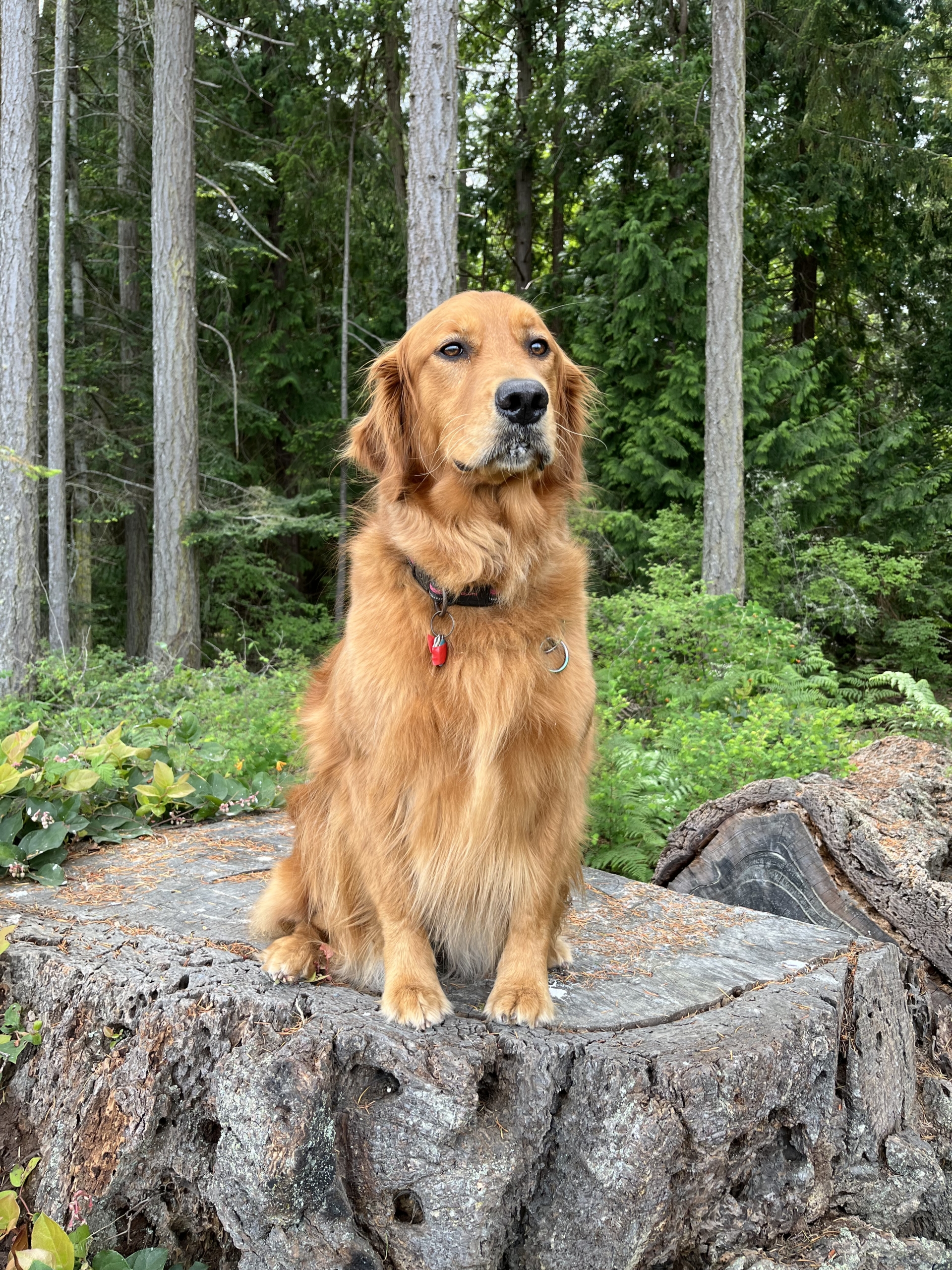
Yesterday I stood watching my dog Scarlett stop along the trail to investigate something that apparently deserved her complete and undivided attention. I have no idea what it was. Perhaps a scent left behind by another dog, a patch of grass carrying a story only dogs understand, or something hidden in the wind.
Whatever it was, it was important enough that the world around her simply disappeared.
Meanwhile, I was somewhere else entirely.
I was thinking about work, messages I had not answered, responsibilities waiting for me at home, things I needed to remember, and the many concerns that seem to drift through our lives lately. Rising costs. Uncertainty. Worries about family and friends. The steady stream of information arriving faster than we can process it. Things happening in our communities and across the world that somehow make their way into our hearts whether we invited them there or not.
As I stood there, I realized something uncomfortable:
One of us was standing in the present moment.
And it was not me.
There seems to be a quiet heaviness moving through people lately. Not always the kind that announces itself loudly. More often it arrives disguised as something else.
It looks like forgetting why you walked into a room.
It looks like lying awake thinking about tomorrow.
It looks like feeling tired even after a full night’s sleep.
It sounds like:
“I don’t know why I feel so overwhelmed.”
“I can’t seem to shut my mind off.”
“I just feel off lately.”
I hear these words often in conversations. Sometimes spoken softly, almost apologetically, as though people believe they should somehow be handling life better than they are.
But I wonder if we have become too quick to think something is wrong with us.
For most of human history, our worries stayed close to us. We worried about our family, our community, our home, and the things directly in front of us. Our nervous systems evolved in a world where concerns had boundaries. We could see them, understand them, and respond to them.
Today we wake up and, before our feet even touch the floor, we can absorb uncertainty from every direction. News updates. Financial pressures. Opinions. Fears. Worries for people we love. Stories of suffering from places we may never visit.
Our minds are asked to carry more than perhaps they were designed to carry.
The body does not always know the difference between a danger standing in front of us and a constant stream of information asking for our attention. It continues doing exactly what it was designed to do: scanning, preparing, watching, listening.
Perhaps that is why many people feel as though they are running while sitting still.
Perhaps we are not failing.
Perhaps we are simply carrying too much.
As I stood beside Scarlett, I noticed something else.
She was not thinking about tomorrow.
She was not replaying yesterday.
She was not wondering whether she had made the wrong decision last week or trying to predict next month.
She was simply participating in life as it was arriving.
A scent carried in the wind.
The warmth of sunlight through the trees.
The sound of leaves moving.
The feel of the earth beneath her paws.
I am not suggesting we should all live exactly like dogs. Human beings carry responsibilities and relationships and realities that ask much of us. We cannot ignore the world around us or pretend our concerns do not exist.
But perhaps there is something to learn from creatures that have not read the headlines.
Perhaps there is wisdom in remembering that we were never meant to hold everything all at once.
Perhaps healing is not always found in doing more.
Perhaps sometimes it begins with noticing.
Noticing the wind against your face.
Noticing the rhythm of waves against the shore.
Noticing birdsong you have not heard in weeks because life has been too loud.
Noticing the feeling of your feet touching the earth.
Noticing your dog becoming completely fascinated with something you cannot even see.
The smallest moments often seem insignificant while they are happening. Yet I wonder if they are quietly doing something important.
Maybe they are returning us to ourselves.
The world will continue moving tomorrow.
The headlines will still be there.
But for a few minutes yesterday, standing beside Scarlett on a trail and watching her become deeply fascinated by something hidden in the grass, I remembered something I think many of us have forgotten:
Life is not only what we worry about.
It is also what is happening while we are worrying.

 Gaia Natural Therapies